How to Get Roofing Leads Without Paying Per Lead
Stop renting leads that get sold to three other roofers. Here are eight steps to build lead sources you own, with templates you can copy today.

Get found by more customers
Rankfly finds the keywords roofers can win, then writes and publishes an SEO article every day.
Get my free planKey takeaways
- You can get roofing leads without paying per lead by building sources you own: Google Business Profile, local service pages, reviews, referral partners and neighborhood outreach.
- Cheap shared leads often cost the same per job as pricier exclusive ones once you count how many you need to close one sale.
- Owned leads start slower, but they do not get resold to competitors and they compound over months.
- Answer every lead fast and track where each job came from, or you cannot tell which channel deserves your time.
- Bought leads still make sense in a new market or a slow season, as long as you know your cost per job.
Table of contents
You can get roofing leads without paying per lead by building sources you own: a Google Business Profile, service and city pages, reviews, referral partners and neighborhood outreach. These cost time or a flat monthly fee, not a charge every time a homeowner fills out a form.
Owned leads go straight to your phone and your website. They are not resold to other roofers, and they get cheaper the longer you keep building them. This guide gives you eight steps, copy-paste templates and a troubleshooting table.
Owned leads vs bought leads: what is the difference?
A bought lead is a homeowner contact you pay for, either shared with other roofers or sold to you alone (exclusive). An owned lead is a homeowner who finds you through your own profile, website, reviews, referrals or outreach, so you pay no per-lead fee.
Most pages that rank for roofing lead searches are written by lead sellers, agencies and software vendors. That is not a surprise, since they have something to sell. Here is how the options compare, using cost ranges from ProLine's roundup of roofing lead services.
| Shared leads | Exclusive bought leads | Owned leads | |
|---|---|---|---|
| Typical cost | $20 to $50 per lead | $80 to $150+ per lead | Your time, or a flat monthly fee |
| Competition on the lead | High, several roofers call the same homeowner | None on that lead | Low, the homeowner chose you |
| Close rate potential | Low to moderate | Moderate to high | Usually highest, because trust came first |
| Speed | Days | Days | Weeks to months |
| Who owns the asset | The vendor | The vendor | You |
The tradeoff is speed. Bought leads arrive this week. Owned leads take longer, but you keep everything you build.
Step 1: Work out what a job costs you today
Before you change anything, find your cost per closed job. Divide what you spent on a lead source by the number of jobs it produced. A cheap lead is not cheap if it rarely closes.
ProLine gives a useful example. If you close 1 out of 10 shared leads at $30 each, you spend $300 per job. If you close 1 out of 3 exclusive leads at $100 each, you also spend $300 per job, with less wasted effort.
Write down three numbers for the last 90 days:
- Total spend on each lead source (leads, ads, agency fees).
- Number of leads each source sent.
- Number of signed jobs from each source.
Cost per job is spend divided by signed jobs. Keep this sheet. You will use it to decide how much of your week goes to each step below.
Step 2: Fix your Google Business Profile
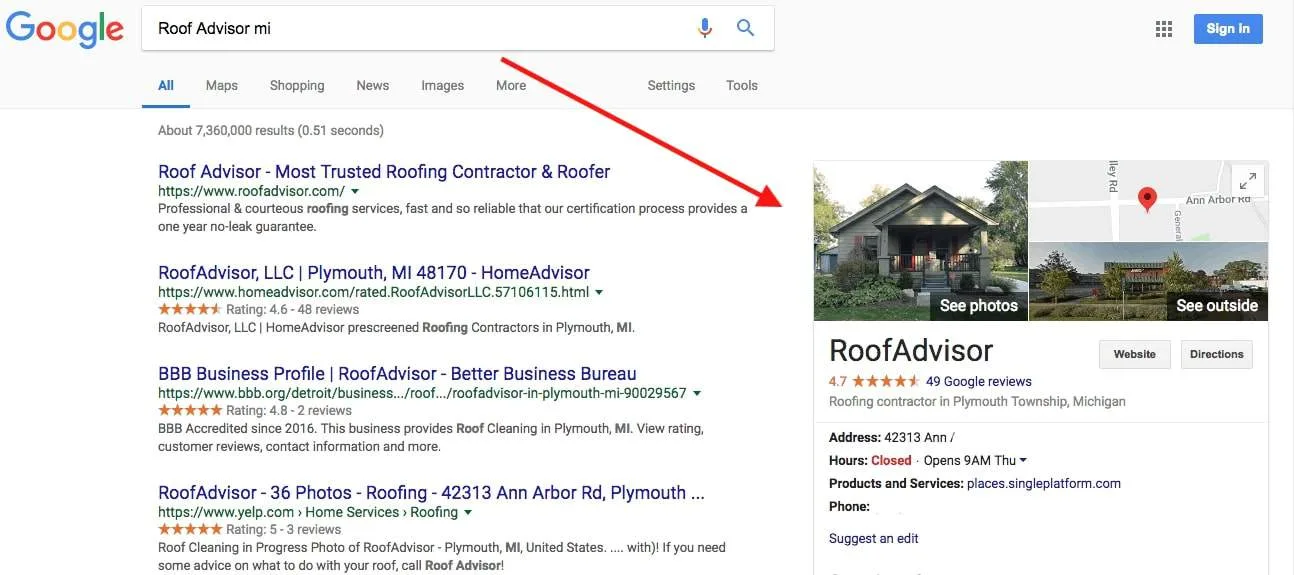
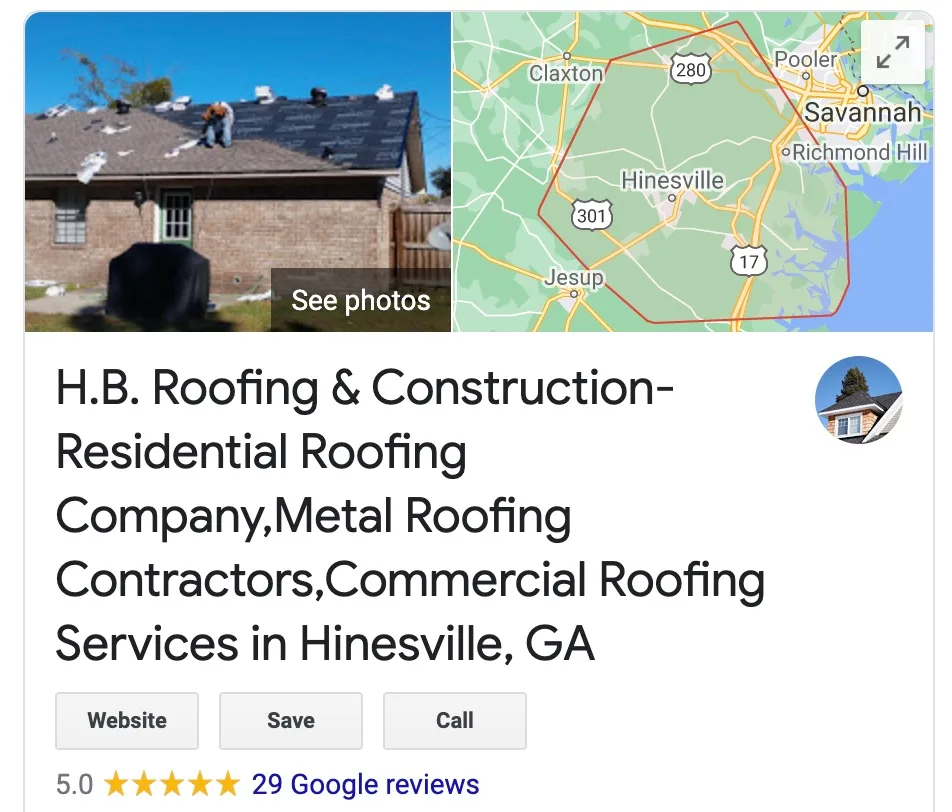
Your Google Business Profile is the fastest owned lead source for a local roofer, because it shows up when homeowners search for roofers near them. It is free and it sends calls straight to your phone.
Work through this list:
- Primary category: choose Roofing contractor.
- Secondary categories: add only ones that match work you actually do.
- Service area: list every city and county you will really drive to.
- Services: add repair, replacement, inspection, storm damage and any materials you install.
- Business description: write it in plain words, with your city and what you do. Do not stuff keywords.
- Hours and phone: make them match your website exactly. Keep your name, address and phone number identical everywhere online.
- Photos: upload real job photos, before and after, every week.
- Posts: use updates for seasonal offers like free inspections after a storm.
Also claim your Yelp and Bing Places listings. They are free, and each one is another place a homeowner can find you.
Step 3: Build service pages and city pages that rank
Homeowners search for things like roof repair in their city. If your site has one page that says roofing services, you will lose to a competitor with a page for each service and each city. Build one page per service and one per city where you have really worked.
Use this outline for each page:
Title tag: Roof Repair in [City], [State] | [Company Name]
H1: Roof Repair in [City]
Intro: 2 sentences. What you fix, how fast you respond, your phone number.
H2: Common roof problems in [City] (hail, wind, age, flashing leaks)
H2: How a repair works, step by step
H2: Recent jobs in [City] (2-3 photos with street or neighborhood names)
H2: Reviews from [City] customers
H2: Questions homeowners ask (3-5 FAQs)
Button: Call now / Request a free inspection
Two rules keep these pages from being thin. Use real photos and details from each city, and do not create pages for cities you have never served. Use the free keyword generator to find the phrases homeowners use. Add local business schema so Google can read your name, address, phone and service area.
Step 4: Ask every customer for a review
Reviews are the cheapest lead source you have, and most roofers under-use them. A homeowner comparing three roofers will usually call the one with more recent, specific reviews.
Ask within 24 hours of finishing the job, when the customer is happiest. Send your Google review link by text, not just by email. Use this template:
Hi [Name], this is [Your Name] from [Company]. Thanks for trusting us with your roof. If you're happy with the work, would you leave a quick review? It helps other homeowners find us. Here's the link: [Google review link]
Reply to every review, good or bad, within a day or two. Mention the service and city in your reply when it fits naturally, for example: Thanks, Dana. Glad we could get the leak fixed before the weekend.
Step 5: Set up referral partners who send you work
Other local businesses already talk to your future customers. Referral partners are the closest thing to a free lead machine. RoofSnap's lead generation guide is one of several roofing resources that point to the same partner types.
Start with these:
- HVAC companies: their techs are on roofs and in attics and spot problems early.
- Real estate agents: buyers and sellers often need an inspection or repair fast.
- Remodelers and general contractors: exterior projects often include the roof.
- Homeowners associations and property managers: they keep lists of vendors they trust.
- Landlord associations: members own several properties and always need contractors.
This short message works as a first contact:
Hi [Name], I'm [Your Name] with [Company], a local roofer serving [City]. When your clients need a roof inspection or repair, I can usually get out within [timeframe] and I'll send you a photo report either way. Happy to do the same for your customers if you ever want a second set of eyes on a roof. Can I buy you a coffee this week?
Then make it easy for them to refer you. Give each partner a card or a link, and always report back on what happened with the customer they sent. A referral that gets a thank-you and a quick update is a referral you get again.
If you want more ideas for creating sales without buying leads, this video walks through seven of them.
Step 6: Work your neighborhood and storm opportunities
Roofing is local down to the street. Every finished job is a chance to get the next one on the same block.
- Yard signs and door hangers: after a job, with the homeowner's permission, tell the neighbors who did the work.
- Nextdoor: claim your free business page, answer roofing questions in your area and post finished jobs. Paid campaigns are also possible through Nextdoor Ads Manager, but the free page and honest answers cost nothing.
- Free inspections: offer them after hail or wind events and say so on your profile and website.
- Local groups: join your chamber of commerce and sponsor a local event. Members often get a directory listing.
After a big weather event, speed matters. Check which neighborhoods were hit, post an update on your profile, and canvass those streets with a short, honest message. RoofSnap has a guide on working severe weather as a roofer. Do not pressure anyone, and do not promise what an insurer will pay.
Step 7: Publish answers to the questions homeowners ask
Before a homeowner calls, they search. Questions like how much does a roof replacement cost, repair or replace, and does insurance cover hail damage show up again and again. A page that answers one of them clearly can bring in leads for years.
Pick 10 questions to start. Find them with the free People Also Ask tool, your own phone log and the questions customers ask at the door. Then write one article per question, in plain language, with your city and real examples.
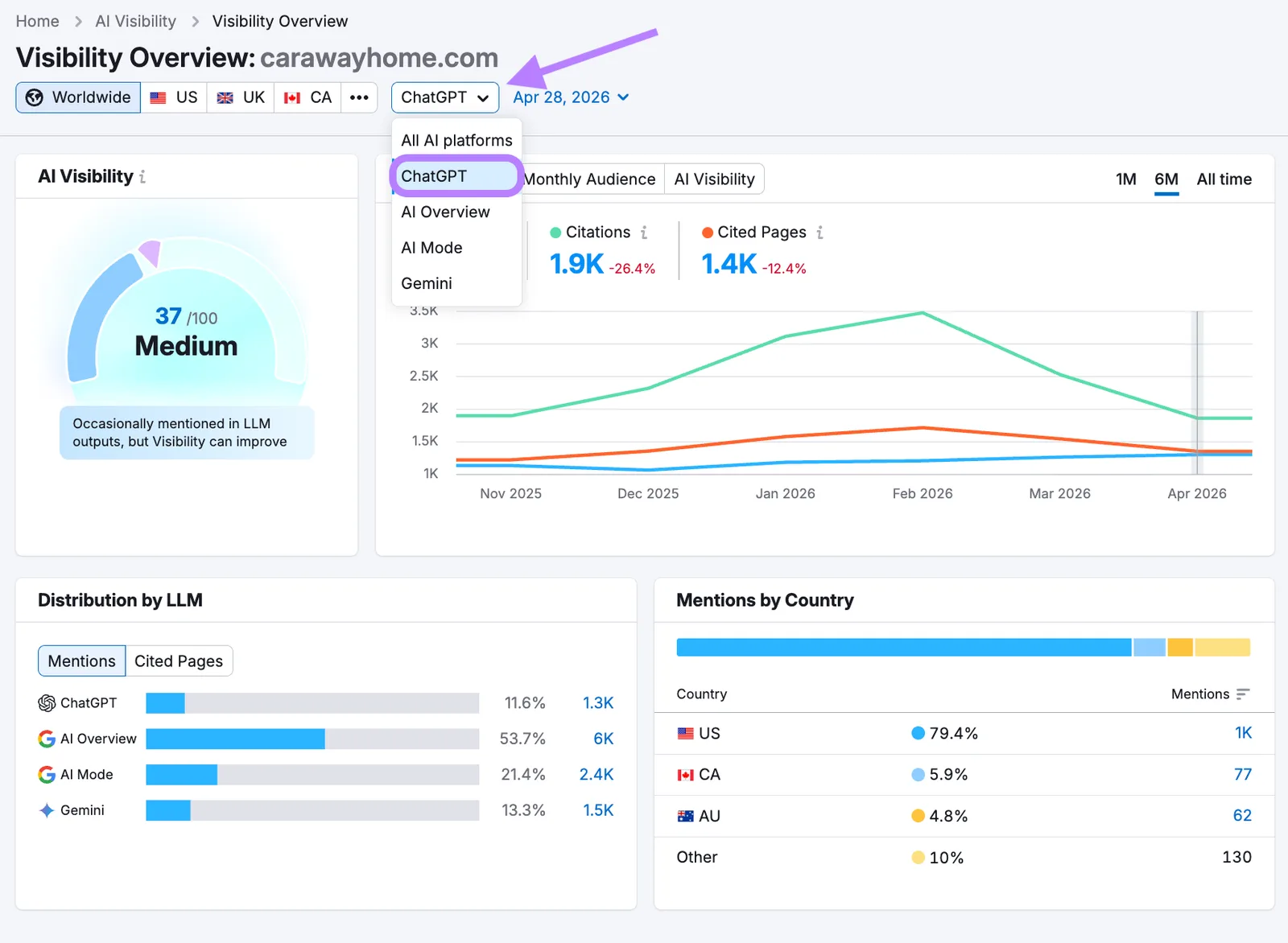
This also helps in AI assistants. When someone asks ChatGPT or Perplexity who to hire, those tools pull from pages that answer questions clearly. A site with specific, local answers has a better shot at being quoted than a site with one services page.
The catch is time. Writing one good article takes a few hours, and most roofers do not have them. That is where an automated option can help, which is covered below.
Step 8: Answer fast and track every source
Owned leads are worth the most when you reach them first. A homeowner with a leak calls two or three roofers and often books the first one who picks up.
- Answer the phone or call back within minutes.
- Set up a missed call text-back that says you will call soon.
- Add a Request a free quote form that sends you a text or email right away.
- Ask every caller how they heard about you and write it down.
Review your cost per job sheet once a month. If Google Business Profile calls close at a higher rate than anything else, spend more time there. If one referral partner sent three jobs, take them to lunch.
When bought leads still make sense
Owned leads are slower at the start. If you are entering a new city, have a gap in your schedule or need jobs this month, a bought source can fill the pipeline while the owned sources build.
A few examples, with the details as the sources report them:
| Service | Model | Reported cost |
|---|---|---|
| Service Direct | Pay-per-call marketplace | You set your cost per lead; no set-up fees and no term contract, per its site |
| 99 Calls | Pay-per-valid-call | About $99/month plus roughly $20 to $80+ per call, per ProLine |
| Inquirly | Exclusive leads and calls | About $50 to $300 per lead, $100 to $900 per call, per ProLine |
| Directorii | Verified roofer directory | $49/month, plus 1.5% to 3% of project value when its guarantee applies, per ProLine |
Prices change, so check current terms before signing anything. Ask four questions first:
- Is the lead exclusive to me or shared?
- How do you define a valid or billable lead, and can I get a refund for bad ones?
- Can I set a service area and a monthly cap?
- Is there a contract, and how do I cancel?
Treat these as a bridge, not a foundation. When you stop paying, the leads stop. A review, a ranking and a referral partner keep working.
Troubleshooting: common problems with owned roofing leads
| Problem | Likely cause | Fix |
|---|---|---|
| Profile gets views but few calls | Few reviews, weak photos, wrong phone number | Add recent job photos, ask for reviews, check your number |
| City pages are not ranking | Thin pages that copy each other | Add real local photos, jobs, reviews and FAQs per city |
| Leads come in but do not book | Slow response | Respond in minutes, add missed call text-back |
| Customers do not leave reviews | You are asking too late or by email only | Text the link within 24 hours of finishing |
| Referral partners go quiet | No follow-up | Report back on every referral and send a thank-you |
| Nothing seems to work after a month | SEO takes time | Keep publishing and track calls for 3 to 6 months before judging |
If you are still stuck, check your basics with a local SEO checklist before you spend more on ads or leads.
How Rankfly helps you get roofing leads you own
The slowest part of the plan above is step 7: writing helpful pages every week while you run jobs. Rankfly handles that part. It finds keywords your site can realistically rank for, plans a 30-day content calendar, researches the current top results, then writes and publishes one SEO article a day in your voice, with internal links, sources, an FAQ and a featured image. It publishes to WordPress, Shopify, Webflow, Wix and others, and review mode lets you approve each article first.
It also has AI visibility tracking, which asks ChatGPT, Claude, Gemini and Perplexity the questions buyers ask and shows whether you are recommended. Rankfly costs $66/month for 30 articles, with a 3-day free trial. It is not a full SEO suite like Semrush or Ahrefs, and it does not manage your Google Business Profile or reviews, so steps 2, 4, 5 and 6 are still yours.
Final thoughts
You can get roofing leads without paying per lead by building a Google Business Profile, local pages, reviews, referral partners and neighborhood presence you own. Start with steps 1 and 2 this week, add one referral partner and a review text, and track what each source brings in. Use bought leads only as a short bridge while the owned ones grow.
Frequently asked questions
How do I get free roofing leads?
The free sources are your Google Business Profile, customer reviews, referrals from HVAC companies, realtors and remodelers, a free Nextdoor business page and local networking. They cost time instead of money, and they work best when you use all of them together.
How long does it take to get roofing leads without paying for them?
A fixed-up Google Business Profile and a review text can produce calls within weeks. Local pages and articles usually take a few months to rank, so judge them after three to six months, not three weeks.
Are exclusive roofing leads better than shared leads?
Exclusive leads go to you alone, so close rates tend to be higher, but they cost more per lead. ProLine reports about $20 to $50 for shared leads and $80 to $150+ for exclusive ones, so compare cost per closed job, not cost per lead.
How much do roofing leads cost?
It depends on the market, lead type and provider. Reported ranges include $20 to $50 for shared leads, $80 to $150+ for exclusive leads and up to several hundred dollars per exclusive call in some markets. Check current pricing with any provider before you commit.
How do I get roofing leads from insurance companies?
Insurance companies generally let homeowners choose their own contractor, so there is rarely a lead list to get. The practical route is storm damage content on your site, free inspections after weather events and referrals from local agents and others you meet in your area.
About the editorial team
Emma writes Rankfly's guides on SEO, AI search and getting small businesses found on Google and ChatGPT.