Perplexity vs ChatGPT: How Each Finds and Cites Sources
Perplexity retrieves first and cites almost every answer. ChatGPT generates first and cites only when it searches. Here is how to choose, and how to get your site cited by both.

See if ChatGPT recommends you
Rankfly tracks your visibility in ChatGPT, Claude, Gemini and Perplexity, then writes the articles that close the gaps.
Check my AI visibilityKey takeaways
- Perplexity searches the web by default and cites sources on nearly every answer, while ChatGPT answers from training first and cites only when it runs a search.
- Choose Perplexity for current facts and sourced research, and ChatGPT for writing, reasoning, coding and long conversations.
- Both entry paid plans were listed at about $20 a month in recent comparisons, and many people use the free tiers of both.
- To get cited by either tool, your page must be crawlable, answer the question in its first sentences, and stay current.
- You can check whether AI assistants recommend your business instead of guessing.
Table of contents
Perplexity is the better pick when you want a sourced answer to a current question. ChatGPT is the better pick when you want to write, reason, code or hold a long conversation. The difference that matters most for a business is how each one finds sources: Perplexity searches the web on nearly every query and shows citations, while ChatGPT answers from its training first and cites sources only when it runs a search.
That split decides how people discover your site through each tool. This guide compares Perplexity AI vs ChatGPT on features, pricing and everyday tasks, then focuses on what the comparison means if you want to be the page they quote.
Perplexity vs ChatGPT at a glance
Perplexity is an answer engine: a search tool with a large language model layered on top. ChatGPT is a conversational assistant with web search added. ExtremeTech's comparison puts it in one line: ChatGPT is built to reason; Perplexity is built to retrieve.
| Perplexity | ChatGPT | |
|---|---|---|
| Tool type | Answer engine: web search plus an LLM | Conversational assistant with search added |
| Web search | Default on every query | Optional, when prompted or when it decides to |
| Citations | On nearly every answer | Only when it searches |
| Models | Its own Sonar models plus models from OpenAI, Anthropic, Google and xAI | OpenAI's GPT models |
| Main strength | Current facts, fact-checking, sourced summaries | Writing, reasoning, coding, extended conversation |
| Main weakness | Strains when no good source exists; can misread a cited source | Can give a confident answer with no source behind it |
| Paid entry plan | About $20 a month | About $20 a month |
| Best for | Research and verification | Drafting, explaining and building |
Plans and models change often, so check current pricing on chatgpt.com and perplexity.ai before you pay for anything.
How does each one find sources?
This is the core difference between ChatGPT vs Perplexity, and it predicts almost everything else.
Perplexity: it retrieves first
When you ask Perplexity a question, it searches the live web, pulls in several pages, and then uses a language model to summarize what it found. ExtremeTech describes this as a retrieval-augmented design that feels more like an AI-enhanced search engine than a pure chatbot. Its answers lean on up-to-date information and show their sources alongside the text.
That design is a strength when good sources exist. It is a weakness when they do not. Ask Perplexity something speculative or open-ended and it has little to retrieve, so the answer can feel thin.
ChatGPT: it generates first
ChatGPT builds most answers from what it learned in training. It can browse the web, but it does so when you prompt it to or when it decides a search is needed. ExtremeTech notes its core strength is the ability to think through a question using internal knowledge, without looking anything up.
The flip side is that an unsourced answer can sound sure of itself and still be wrong. A June 2026 comparison from Leland points out that ChatGPT has no built-in source check on those answers, while Perplexity can still misread a source it cites. Neither tool removes the need to verify.
The models underneath
Both services use large language models, and they overlap more than most people expect. Perplexity mixes its own Sonar models with models from OpenAI, Anthropic, Google and xAI, and Pro users can choose among them. Perplexity lists which advanced models come with a subscription in its help center.
One caution from the Leland comparison: picking GPT or Claude inside Perplexity is not the same as using that model natively. The output still passes through Perplexity's retrieval layer, so it comes out search-shaped and cited. You also lose ChatGPT-only extras such as Custom GPTs and persistent memory. Model lineups change every few months, so check the publish date on any comparison you read, this one included.
How does each one cite sources?
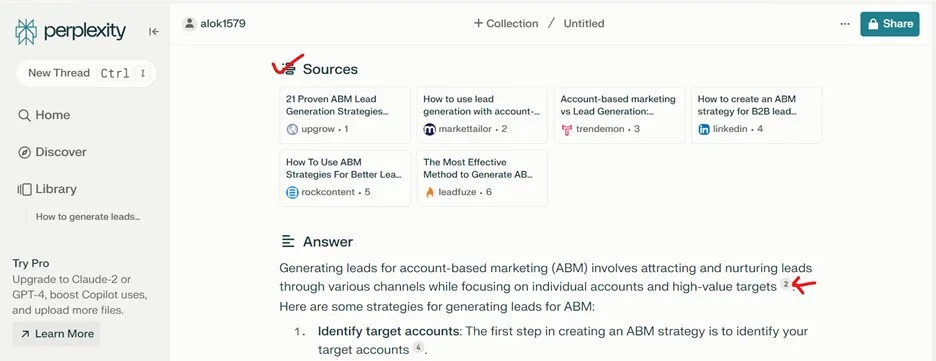
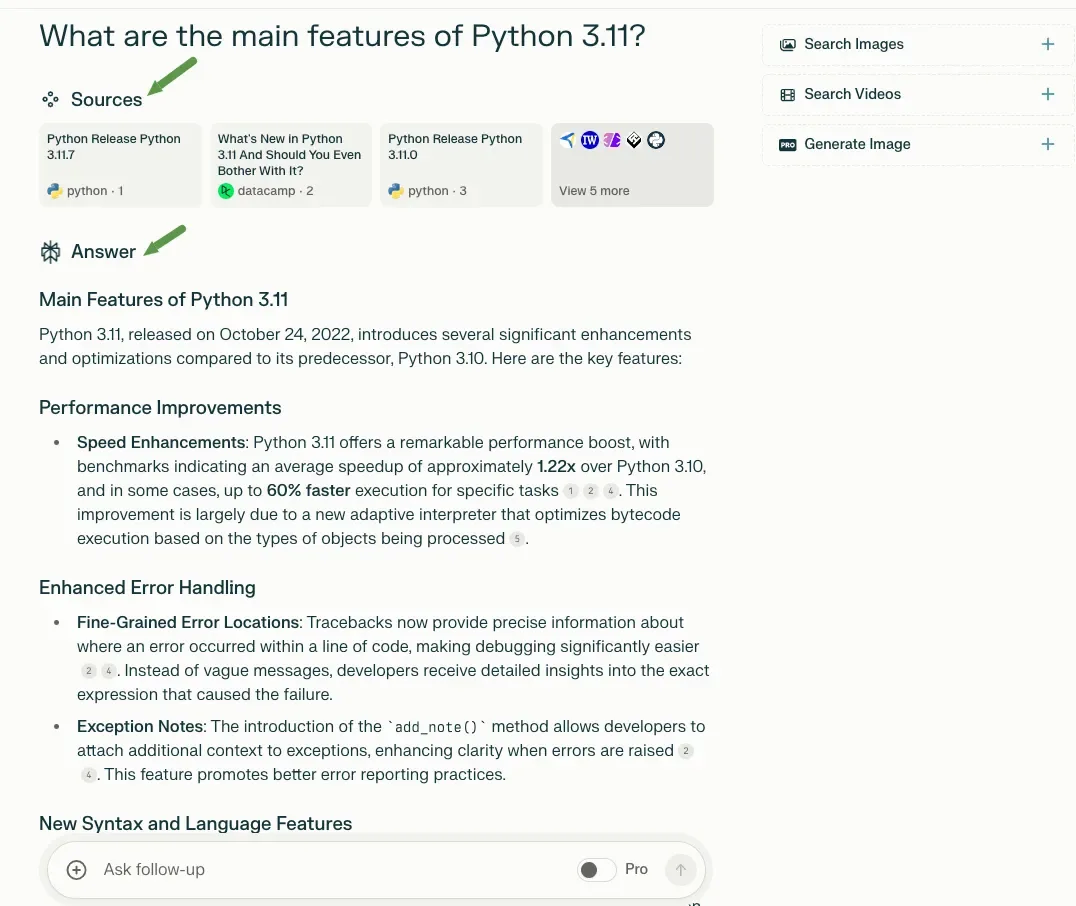
Perplexity cites on nearly every answer, with clickable links next to the claims they support. It also has a Links tab that lists the external pages related to your question. That is why researchers, students and journalists like it: you can click through and check.
ChatGPT shows citations only when it searches the web. When it answers from memory, you get no sources at all. That makes it harder to tell where a claim came from, and it also means fewer pages get named in a typical ChatGPT answer.
Perplexity's audience is real but smaller than ChatGPT's. ChatGPT reached 100 million users in about two months, according to an analyst note reported by Reuters. So Perplexity cites more pages per answer, while ChatGPT puts any one citation in front of a very large audience.
How do they compare on everyday tasks?
Reviewers who ran both tools side by side reached fairly consistent conclusions. These come from ExtremeTech's comparison unless noted.
- Research: Perplexity produces tight, citation-backed summaries and is strong on emerging topics. ChatGPT explains underlying concepts and relationships in more depth. In ExtremeTech's words, Perplexity gets you the facts and ChatGPT helps you understand what they mean.
- Writing: ChatGPT offers more flexibility in tone and is better for reworking a draft over a long thread. Perplexity's drafts tend to read formal and fact-checked, if a little uninspired.
- Coding: Reviewers with domain expertise said ChatGPT is the pick for speed and clean interfaces, while Perplexity is worth trying for careful logic. Both are quick enough to use together.
- File analysis: Both offer it on free accounts. ExtremeTech found both analyzed an unpublished manuscript accurately, with Perplexity better for quick answers and ChatGPT for multi-step reasoning.
- Speed and interface: Perplexity is minimal and answer-first. ChatGPT is conversational and gets smoother as you refine across follow-up questions.
How much do Perplexity and ChatGPT cost?
Both tools have a free tier with daily limits. In recent comparisons, the main paid plans (ChatGPT Plus and Perplexity Pro) were both listed at about $20 a month. Higher tiers exist on both sides and change often, so confirm the current numbers on each company's own pricing page.
| Plan type | Perplexity | ChatGPT |
|---|---|---|
| Free | Yes, with daily limits on Pro-level features | Yes, with daily caps on advanced models |
| Main paid plan | About $20 a month (Pro) | About $20 a month (Plus) |
| What the paid plan adds | Higher Pro-search limits, model choice, file upload | Higher message limits, advanced models, data analysis, Custom GPTs, voice |
| Higher tiers | Yes | Yes |
For most small business owners, the free version of either tool is enough to start. Pay when you hit a limit that actually slows your work.
What does this mean for getting your site cited?
If your goal is to be the source these assistants name, the retrieval difference is the part to act on. The steps below are common GEO practice and follow from how each tool works. They are not guaranteed rules, and no one outside these companies knows exactly how their sources are chosen. For the bigger picture, see our guides to GEO vs SEO and getting cited by ChatGPT and AI search.
Be easy to retrieve
Because Perplexity searches the web on nearly every query, a page that cannot be found or read is a page that cannot be cited. Make sure your important pages are indexed and not blocked. A quick pass with the robots.txt checker catches the most common mistake: a rule that keeps crawlers out by accident.
Answer the question first
These tools lift short, direct passages. Put the answer in the first one or two sentences under a heading that matches the question people ask. Write definitions as one clear sentence that stands on its own.
Keep facts current and sourced
Perplexity is built around freshness, so stale pages lose out. Date your pages, update numbers, and link to the primary source for any statistic. Pages that cite their own sources are easier for a retrieval tool to trust and quote.
Cover the questions buyers ask
People ask assistants things like "best plumber near me" or "which CRM fits a 5-person team." Write pages that answer those exact questions, with specifics a generic page lacks: prices, steps, comparisons, examples. The free AI visibility checker is a quick way to see how your site looks to AI tools, and SE Ranking has a useful guide on increasing visibility in AI search engines.
| Action | Helps with Perplexity | Helps with ChatGPT |
|---|---|---|
| Keep pages crawlable and indexed | Needed, since it searches live on nearly every query | Needed whenever it runs a search |
| Answer in the first two sentences | Easy passage to quote and cite | Easy passage to summarize when it searches |
| Update facts and dates | Matches its focus on fresh sources | Helps when it browses for current info |
| Be named across the web, not only on your site | Gives retrieval more places to find you | May also shape what it learned in training |
| Match real buyer questions | Matches how people query it | Matches how people prompt it |
Which should you choose?
The right pick depends on the job. Use this as a quick guide.
| If you are... | Choose | Why |
|---|---|---|
| Fact-checking or researching a current topic | Perplexity | Searches by default and cites nearly every answer |
| Drafting emails, posts or reports | ChatGPT | Flexible tone and strong long-form conversation |
| Writing or debugging code | Either, or both | Reviewers split by preference; trying both is cheap |
| A student or journalist needing sources | Perplexity | Citations are built in, so verifying is quick |
| Building custom workflows or assistants | ChatGPT | Custom GPTs, memory and data analysis live here |
| On a tight budget | The free tier of both | Both free tiers cover light use |
| A business owner who wants to be recommended | Neither on its own | You need content that gets cited and a way to track it |
If your work mixes research and writing, the free tiers of both plus one paid plan for the tool you hit limits on is a sensible setup. Paying for both makes sense only when each one clearly earns its $20.
Is there a third option for getting found?
Perplexity and ChatGPT are tools you use. They do not make your business show up in anyone else's answers. If your real goal is to be found on Google and in AI answers without doing the SEO work yourself, that is a different job.
Rankfly is an SEO autopilot built for that job. Its AI visibility tracking asks ChatGPT, Claude, Gemini and Perplexity the questions buyers ask, then shows your visibility score, share of voice, position, sentiment and cited sources against up to 3 competitors, across 20 tracked questions. Where a competitor gets recommended and you do not, that gap becomes an article, and each article is re-checked 14 days after it goes live. Rankfly writes and publishes one SEO article a day in your brand's voice, with sources, internal links and an FAQ. It costs $66 a month for 30 articles, with a 3-day free trial.
It is not a general AI assistant like ChatGPT or a full SEO suite like Semrush or Ahrefs. It suits small teams who want the content researched, written and published for them. See how it compares with other tools or read about AI autoblogging.
For a wider look at how assistants differ in recommending brands, read Claude vs ChatGPT vs Gemini, or compare options in our guide to the best AI visibility tools.
Final thoughts
Perplexity retrieves and cites by default, ChatGPT generates first and cites when it searches, so use Perplexity for sourced research and ChatGPT for writing and reasoning. To get your own site named by either, make it crawlable, current and direct in its answers. Then check whether the assistants actually recommend you.
Frequently asked questions
What kind of AI is Perplexity?
Perplexity is an AI answer engine that combines live web search with a large language model. It retrieves pages, summarizes them into one answer and cites its sources. It also lets Pro users choose among models from several AI labs.
Is Perplexity better than ChatGPT?
It depends on the task. Perplexity is stronger for current facts and cited research because it searches the web by default. ChatGPT is stronger for writing, reasoning, coding and long conversations.
Can I use Perplexity and ChatGPT together?
Yes, and many people do. A common workflow is to gather cited, current facts in Perplexity, then use ChatGPT to turn them into a draft, plan or code. Check the facts before you publish.
How do I get my website cited by Perplexity or ChatGPT?
Make your pages crawlable and indexed, answer the question in the first sentences, keep facts current, and link to primary sources. Then check whether assistants actually name you for the questions your buyers ask. No one can guarantee a citation, so measure and adjust.
What is a good Perplexity score?
In language modeling, perplexity is a measure of how well a model predicts text, and lower is better. There is no single good score, because it depends on the dataset and the model. It is a different thing from Perplexity the AI search product.
About the editorial team
Emma writes Rankfly's guides on SEO, AI search and getting small businesses found on Google and ChatGPT.