Best AI Visibility Tools in 2026 (Compared)
Seven AI visibility tools compared on engines tracked, price and whether they help you fix the gaps they find, with a simple way to pick the right one.

See if ChatGPT recommends you
Rankfly tracks your visibility in ChatGPT, Claude, Gemini and Perplexity, then writes the articles that close the gaps.
Check my AI visibilityKey takeaways
- The best AI visibility tool depends on whether you only need to measure your presence in AI answers or also want help fixing the gaps.
- Budget trackers like Otterly and Peec AI start near $29 and €89 a month, while enterprise platforms like Profound and Ahrefs Brand Radar cost several times more.
- AI answers vary a lot from run to run, so judge tools on mention rate and share of voice across many prompts, not on one answer or one position.
- A dashboard does not improve your visibility by itself; someone still has to turn gaps into content, citations and page fixes.
- You can build a free baseline first with GA4's AI Assistant channel and a manual set of buyer questions before paying for anything.
Table of contents
The best AI visibility tool depends on what you need next. If you only want to measure how often ChatGPT, Perplexity and Gemini mention your brand, Peec AI and Otterly are the usual low-cost starting points. If you also want the gaps turned into published articles, Rankfly is built for that, and enterprise teams with analysts tend to look at Profound.
This list is ranked for small businesses, founders and marketers who want to be found in AI answers without a big budget or a dedicated analyst. We make Rankfly, so weigh our first pick accordingly. Prices and engine coverage below come from the sources named in each section and change fast, so check current pricing before you buy.
A short video overview of the category, from Semrush, is worth a look before you compare the details.
Quick picks: the best AI visibility tools compared
| Tool | Best for | Starting price (as reported) | Standout feature |
|---|---|---|---|
| Rankfly | Small teams that want gaps fixed with articles | $66/month, includes 30 articles | Tracks ChatGPT, Claude, Gemini and Perplexity, then writes articles for the gaps |
| Peec AI | Small businesses that want a clean monitor | €89/month (Starter) | Visibility, sentiment, position and source analysis |
| Otterly | A cheap, repeatable baseline | $29/month (Lite, 15 prompts) | Daily checks and URL citation reports |
| Semrush AI Visibility Toolkit | Teams already on Semrush | $99/month per domain, as an add-on | AI Strategic Opportunities grouped by urgency |
| Profound | Enterprise and agency programs | Reports range from $99 to $499/month for entry plans | Widest engine coverage, including Copilot, Meta AI and Grok |
| Ahrefs Brand Radar | Teams already on Ahrefs | From around $398/month for selected platforms | Large prompt database next to backlink data |
| LLMrefs | Solo marketers and startups | From around $79/month | AI keyword tracking with a single score |
Prices come from Exposure Ninja, Rankability and Alhena comparisons published in 2026, plus Rankfly's own pricing. Treat them as directional.
What is an AI visibility tool?
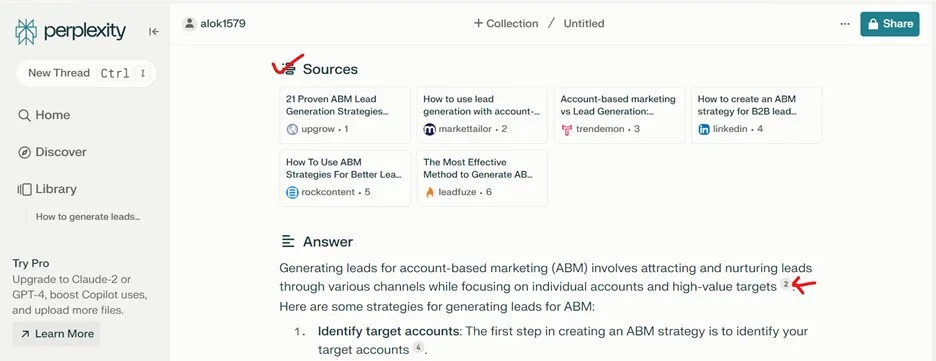
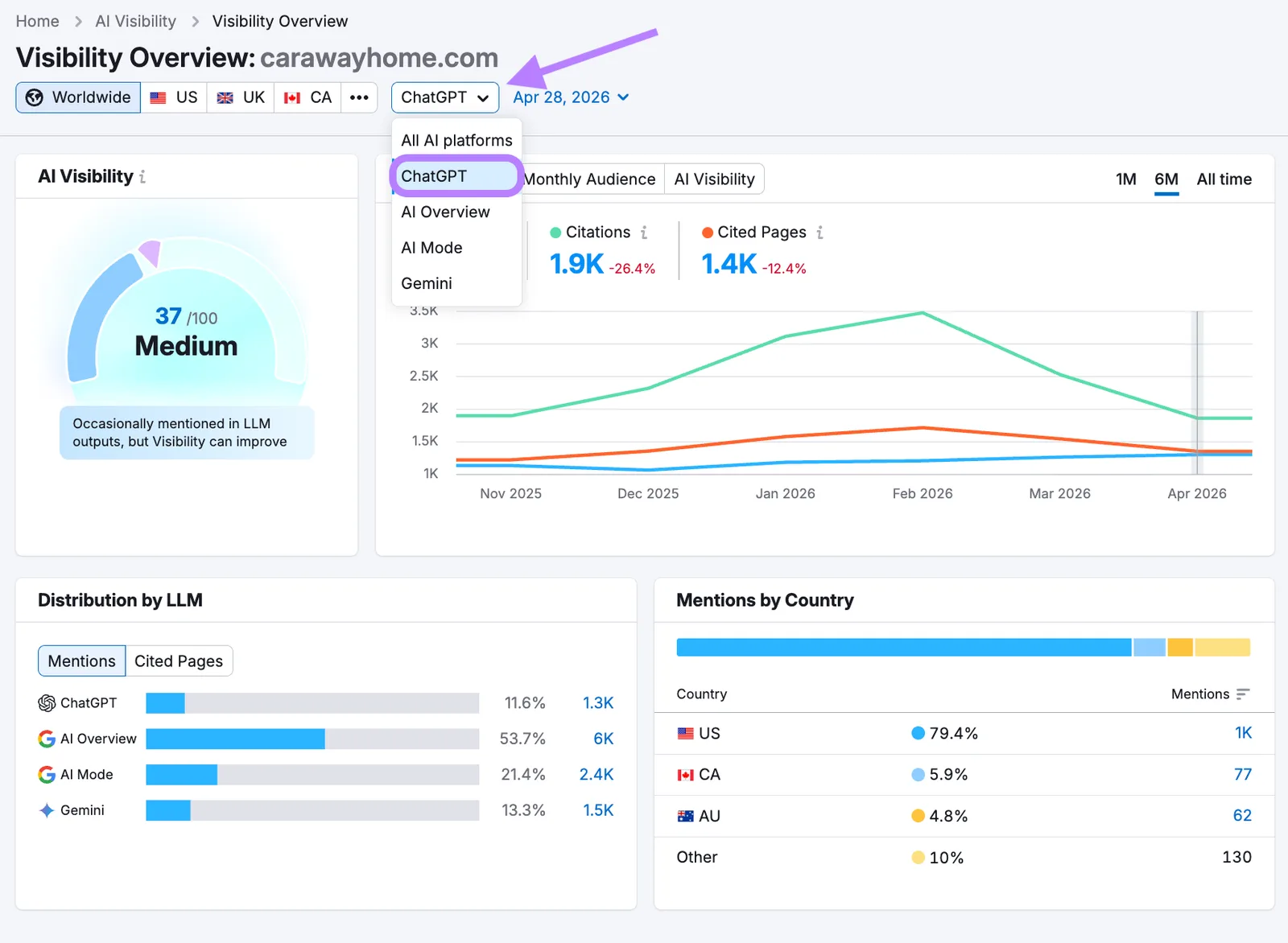
An AI visibility tool tracks how often, and in what context, AI platforms like ChatGPT, Perplexity and Google's AI Overviews mention, cite or recommend your brand. Instead of keyword positions, it reports mentions, sentiment, cited sources and competitor comparisons inside AI-generated answers.
Almost every tool follows the same loop. You define the questions your buyers ask, the tool runs them across AI platforms on a schedule, it records which brands and URLs show up, and it turns the results into trends. The differences come down to which engines are covered, how many questions you can track, and what the tool helps you do afterward.
If you want the bigger picture on how this differs from classic SEO, our guide to GEO vs SEO covers it.
1. Rankfly: best for small teams that want the gaps fixed
Rankfly is an SEO autopilot for small businesses, founders and marketers. Its AI visibility tracking asks ChatGPT, Claude, Gemini and Perplexity the questions buyers ask, then shows a visibility score, share of voice, position, sentiment and cited sources versus up to 3 competitors. You can track 20 questions.
The difference is what happens next. Gaps where a competitor is recommended and you are not become articles. Rankfly researches the current top 10 results, writes the article in your brand's voice with internal links, sources, an FAQ and a featured image, and publishes it to WordPress, Shopify, Webflow, Wix, Framer, Ghost, Notion or any site with a webhook or REST API. Each article is re-checked 14 days after it goes live, so you see whether the gap closed.
Who it's for: founders and small marketing teams who would rather get content researched, written and published for them than read dashboards.
Pros:
- Tracking and content in one subscription: $66/month covers 30 articles plus the tracking, keyword research and publishing
- Review mode lets you approve each article before it goes live
- Writes in 14 languages
- A free 30-day content plan takes about three minutes, and there is a 3-day free trial
Cons:
- 20 tracked questions and up to 3 competitors is built for small teams, not large prompt programs
- Tracks four assistants, so it is not the pick if you need the widest engine coverage
- It is not a full SEO suite like Semrush or Ahrefs, and it does not offer enterprise or agency reporting
2. Peec AI: best simple monitor for small businesses
Peec AI is a specialist AI search analytics platform. According to Exposure Ninja's comparison, the Pro version tracks ChatGPT, Perplexity, AI Overviews, AI Mode, Gemini and Claude. It reports a visibility score, sentiment, average position in answers that list brands, and which third-party sites are cited most often.
Its citation gap analysis is the part reviewers like most. It shows which outside sites get referenced where you do not, which tells you where to aim outreach or digital PR.
Who it's for: small businesses and marketing teams that want clear competitor benchmarking without a heavy investment.
Pros:
- Lowest entry price of the three tools Exposure Ninja compared: Starter €89/month, Pro €199/month, Enterprise €499+
- Simple, easy-to-read interface
- Strong source and citation analysis
Cons:
- No structured strategic opportunities framework yet; its Actions feature was in beta in that review
- Prompt allowances depend on your plan, so lower tiers can feel tight
- You still need your own process to turn insights into content and outreach
3. Otterly: best low-cost baseline
Otterly advertises a $29 monthly Lite plan with 15 prompts and daily checks, according to Alhena's comparison. It covers ChatGPT, Google AI Overviews, Perplexity and Microsoft Copilot. Claude, Gemini and AI Mode are listed as add-ons, and citation reports show which URLs appear in collected responses.
Fifteen well-chosen prompts make a sensible pilot. They are not a complete picture of a market, so treat the Lite plan as a starting point.
Who it's for: anyone who wants a repeatable baseline on a tight budget.
Pros:
- Cheapest dedicated option on this list
- Daily checks and URL-level citation reporting
- Easy to start with a narrow set of commercial questions
Cons:
- Extra engines can require paid add-ons, so price out the setup you actually need
- Small prompt allowance on the entry plan
- Monitoring only; the fixing is up to you
4. Semrush AI Visibility Toolkit: best if you already use Semrush
Semrush's AI Visibility Toolkit benchmarks how often your brand appears in AI-generated answers and where competitors beat you. Exposure Ninja lists its features as a visibility overview, competitor research, prompt research (with AI volume, difficulty and intent), brand performance with share of voice and sentiment, daily prompt tracking, and an AI-focused site audit.
Its AI Strategic Opportunities are grouped by what to do now, what takes time, and what is urgent. That prioritization is what sets it apart from most monitors.
Who it's for: teams already inside Semrush with an established SEO or content process. Exposure Ninja also calls it practical for small to mid-sized businesses starting to track AI search.
Pros:
- Prioritized opportunities, not just charts
- Fits into an existing Semrush workflow
- $99/month per domain as an add-on
Cons:
- Sits on top of Semrush plans, which start at $139.95/month for Pro, per the same source (Semrush One is $199/month)
- Tracks ChatGPT, AI Overviews, AI Mode and Gemini, so Perplexity is not covered
- More tool than a founder who only wants AI answers needs
5. Profound: best for enterprise programs
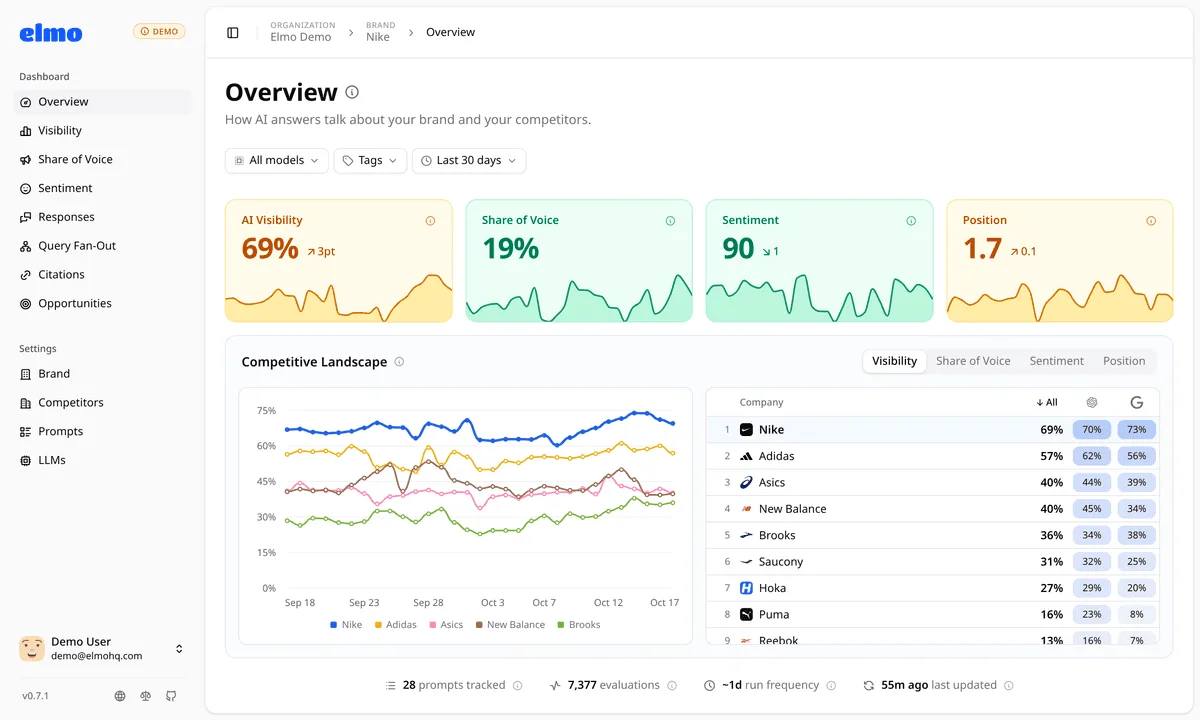
Profound is a specialist platform. Exposure Ninja lists support for ChatGPT, Google AI Overviews, AI Mode, Gemini, Microsoft Copilot, Meta AI, Grok and Perplexity, which makes it the widest tracker in that comparison. It adds sentiment analysis, citation share, topic tracking, AI referral traffic, prompt volumes and a beta shopping view for ChatGPT.
Who it's for: brands with dedicated content, digital PR and SEO teams, plus agencies that want granular data.
Pros:
- Widest engine coverage reported
- Deep citation and share-of-voice reporting
- Prompt volume estimates work like keyword research for AI answers
Cons:
- Price is unclear across sources: Exposure Ninja lists Starter at $99/month and Growth at $399/month, while Rankability says entry pricing has historically been around $499/month. Ask for a quote for the setup you need
- Most businesses need the higher plan for multi-platform tracking and prompt volume
- Data-heavy dashboards can overwhelm teams without an analyst, and its opportunity insights are less time-prioritized than Semrush's
6. Ahrefs Brand Radar: best for teams already on Ahrefs
Ahrefs Brand Radar pairs a large prompt database with custom prompt options and citation comparisons across brands. Alhena's comparison points out that database access and custom checks are different allowances, so ask exactly which one your plan includes.
Who it's for: SEO teams already doing backlink and search research in Ahrefs who want AI answer data in the same place.
Pros:
- Broad prompt research next to your existing SEO data
- Good for spotting citation opportunities and comparing brands
Cons:
- Rankability reports pricing from around $398/month for selected platforms, which is steep for a small business
- Broad database access does not mean your own questions are checked repeatedly
- Research-oriented, not a content engine
7. LLMrefs: best budget option for solo marketers
LLMrefs focuses on AI keyword tracking, visibility across AI search surfaces, competitor comparisons and practical suggestions, with a single LLMrefs Score. Rankability lists it from around $79/month and calls it a good fit for solo marketers, startups and small teams.
Pros:
- Affordable entry into AI visibility tracking
- Trend reports and optimization suggestions
Cons:
- Check refresh frequency, tracked prompts, platform coverage and historical data limits before committing
- Less depth than the specialist platforms
Other tools worth a look
A few more names come up in the same comparisons. Prices are as reported by Rankability and are approximate.
| Tool | Reported starting price | Noted for |
|---|---|---|
| ZipTie | From $69/month | AI Overviews, ChatGPT and Perplexity tracking |
| Nightwatch | From around $32/month | Rank tracking and AI tracking together |
| Keyword.com AI Tracker | From around $24.50/month | Lightweight add-on |
| Rankscale AI | From around €20/month | Low-cost monitoring |
How to choose an AI visibility tool
Start with the job, not the feature list. Alhena's guide makes a useful distinction: tracking tells you where you stand, while optimization is the work you do afterward, such as correcting product information, improving pages and closing gaps in outside coverage. Buying a dashboard does not buy better recommendations.
| If you are... | Look at |
|---|---|
| A founder or small team who wants gaps turned into content | Rankfly |
| A small business that wants a clear, affordable monitor | Peec AI or Otterly |
| Already paying for Semrush | Semrush AI Visibility Toolkit |
| Already paying for Ahrefs | Ahrefs Brand Radar |
| An enterprise or agency with an analyst | Profound |
| A solo marketer on a tight budget | Otterly or LLMrefs |
Which metrics to trust
AI answers are not stable, and that shapes how you should read any dashboard.
That is why a single run of a single prompt tells you almost nothing. Lean on frequency across many prompts:
- Mention rate: the share of tracked answers that name you. If you appear in 46 of 200 answers, that is 23%.
- Share of voice: your mentions as a share of all mentions for you and your competitors.
- Cited URLs: which of your pages, and which third-party pages, AI answers use as sources. This is usually the most actionable data.
- Sentiment and accuracy: whether the answer describes you correctly, including features and prices.
- Average position: treat with caution, since answer order changes between runs.
Questions to ask before you buy
- Which AI engines does it query on the plan you would actually buy?
- How many questions can you track, and how often are they refreshed?
- Does it show cited URLs, not only mentions?
- Does it explain how its score is calculated?
- Does it collect answers through the platform's API or the consumer interface? The two can return different answers.
- What is the real monthly cost with the extra engines and prompts you need?
- What happens after it finds a gap? Who does the work?
Build a free baseline first
You do not need to pay on day one. Google Analytics 4 added an AI Assistant channel to its default channel grouping, which separates sessions from recognized AI assistants (Search Engine Journal). The change is not retroactive, and some AI visits arrive without a referrer, so treat the number as a floor.
Then write 20 to 40 questions a real buyer would ask, run them in ChatGPT, Claude, Gemini and Perplexity, and note who gets named. Our free AI visibility checker is a quick way to start.
Do not skip the basics
Alhena's guide notes that Google says established SEO practices still apply to AI Overviews and AI Mode, with no special optimization requirement for inclusion. Clear, useful pages that answer real questions still do most of the work. If you want to see how content and citations connect, read our guide to getting cited by ChatGPT and AI search.
Where Rankfly fits against Peec, Otterly and Profound
Peec, Otterly and Profound are strong at the measuring half. They show where you stand, and Profound goes deepest on engines and data. What they leave to you is the next step: deciding what to write, writing it, and publishing it.
Rankfly covers both halves for a small team. It tracks the questions buyers ask, turns the gaps into articles through its daily autoblogging, and re-checks each one 14 days after it goes live, all for $66 a month. If you are weighing it against writing-focused tools too, see our roundup of the best AI SEO tools for small businesses and the Rankfly alternatives pages.
Final thoughts
Pick a pure monitor like Peec AI or Otterly if you only need to see where you stand, Semrush or Ahrefs if you already live in those suites, and Profound if you run an enterprise program. Pick Rankfly if you want the gaps turned into published articles without doing the work yourself. Whatever you choose, start by writing down the questions your buyers ask and checking who gets named today.
Frequently asked questions
What is the best AI visibility tool?
There is no single best tool. Peec AI and Otterly suit small businesses that want to monitor, Semrush and Ahrefs suit teams already using those suites, Profound suits enterprise programs, and Rankfly suits small teams that want the gaps turned into published articles.
Is there a free AI visibility tool?
You can build a free baseline with GA4's AI Assistant channel and by running a set of buyer questions manually in ChatGPT, Claude, Gemini and Perplexity. Rankfly also offers a free AI visibility checker on its tools page. Paid trackers add scheduled runs, competitor comparisons and history.
How much do AI visibility tools cost?
Reported entry prices range from about $20 to $50 a month for budget trackers like Otterly ($29) up to several hundred dollars for platforms like Profound and Ahrefs Brand Radar. Peec AI starts at €89 a month and Semrush's toolkit is $99 a month per domain. Prices change quickly, so confirm them on each vendor's site.
Which AI engines should a tool track?
At minimum, ChatGPT, Perplexity, Gemini and Google's AI Overviews, plus Claude if your buyers use it. Coverage often differs by plan, and some engines are paid add-ons, so check the plan you would actually buy.
How is an AI visibility tool different from a rank tracker?
A rank tracker reports your position for a keyword in search results. An AI visibility tool reports whether your brand is mentioned, cited or recommended inside AI-generated answers, which have no fixed positions and change from run to run.
Do AI visibility tools improve my visibility on their own?
No. Most are measurement tools that show where you appear and where competitors win. Improving visibility still means creating better content, fixing inaccurate pages and earning citations on the sites AI answers rely on.
About the editorial team
Emma writes Rankfly's guides on SEO, AI search and getting small businesses found on Google and ChatGPT.