Claude vs ChatGPT vs Gemini: Which Recommends Your Brand?
A plain comparison of Claude, ChatGPT, Gemini and Perplexity, plus a simple way to check which of them recommends your brand and what to do when none do.

See if ChatGPT recommends you
Rankfly tracks your visibility in ChatGPT, Claude, Gemini and Perplexity, then writes the articles that close the gaps.
Check my AI visibilityKey takeaways
- No assistant wins every job: Claude is praised for following instructions, Gemini for audio, video and images, ChatGPT for everyday use and voice, and Perplexity for showing its sources.
- On API pricing for flagship models, Gemini 3.0 Pro is the cheapest of the three big models, Claude Sonnet 4.6 sits in the middle and GPT-5.5 costs the most.
- Which assistant recommends your brand is a separate question from which is best, and you have to check each one with the same buyer questions.
- Clear, specific, well-sourced pages that rank in search give you the best chance of being mentioned by all four assistants.
Table of contents
No single assistant wins every job. Claude is the one reviewers praise for following detailed instructions, Gemini for audio, video and images, ChatGPT for everyday use and voice, and Perplexity for showing its sources next to each answer. If you care about customers, the more useful question is which of them recommends your brand, and the only way to know is to ask each one the same buyer questions and compare the answers.
This guide compares the four on features, pricing and best use. Then it covers how each one decides what to mention, how to check your own brand, and which assistant to use depending on who you are.
Claude vs ChatGPT vs Gemini vs Perplexity at a glance
The table below puts the facts we can source side by side. Pricing is for developers using the API, not the monthly chat plans, and it reflects flagship models as of July 2026 as reported in a data science comparison. Check each provider's current pricing page before you decide anything.
| ChatGPT | Claude | Gemini | Perplexity | |
|---|---|---|---|---|
| Maker | OpenAI | Anthropic | Google DeepMind | Perplexity |
| Flagship compared | GPT-5.5 | Claude Sonnet 4.6 | Gemini 3.0 Pro | Not covered in the research |
| Context window | 1M tokens | 1M tokens | 1M tokens | Check current docs |
| Input types | Text, image, audio, video | Text, image, PDF | Text, image, audio, video | Check current docs |
| API input price per 1M tokens | $5.00 | $3.00 | $2.00 | Check current pricing |
| API output price per 1M tokens | $30.00 | $15.00 | $12.00 | Check current pricing |
| Reviewers praise it for | Voice mode, higher everyday usage limits, versatile output | Instruction following, agents that work on your computer | Audio and video analysis, image generation, Google ecosystem | Answers with visible source links |
| Best for | Everyday use and general tasks | Careful writing, analysis, low-babysitting work | Multimodal work and Google users | Quick researched answers you can verify |
Prices come from the providers' own pages: OpenAI API pricing, Google AI Studio and Anthropic pricing. Perplexity is left mostly blank on purpose, because the research we have does not cover its specs or prices.
One thing the table shows clearly: all three big models now have 1M token context windows. The gap between them is no longer how much text they can read. It is price, behavior and fit with the tools you already use.
How different are the four, really?
They are all large language models, so for most everyday tasks the answers look similar. The differences show up in how they follow instructions, what inputs they handle, and how much you can use them before you hit a limit. Here is what reviewers who use all of them report.
Instruction following and writing
A writer at Artificial Corner says Claude follows instructions best, including long prompts with many details. In one example, Claude correctly marked deletions in red strikethrough and insertions in blue when asked to proofread, while ChatGPT got the formatting wrong and sometimes rewrote sentences it was told to preserve.
An Android Authority reviewer who pays for all three describes a similar pattern. Claude needed the least rewording of prompts and paused to ask follow-up questions instead of running off in the wrong direction. That is one person's experience, not a benchmark, but it matches what many marketers say about Claude for content work. We cover that matchup in more detail in Claude vs ChatGPT for writing blog posts.
Audio, video and images
Gemini is the pick here. The Artificial Corner reviewer found Gemini 3 best at audio and video analysis, including feedback on a gym video and on spoken English. ChatGPT handled video more slowly and, in that test, could not analyze an audio recording.
For images, the same reviewer rates Gemini's Nano Banana as the best overall, with ChatGPT close behind and better on some prompts. If your work involves media, Gemini vs ChatGPT for business content goes deeper.
Voice, everyday use and limits
ChatGPT wins on feel. The same reviewer calls its Voice Mode by far the best, with a more natural flow than Gemini's. ChatGPT and Gemini also let you use them longer before you hit a daily cap, while Claude users report running into limits quickly.
That is a real cost. A tool you love but cannot use after lunch is not much help on a busy day.
Agents and automation
All three can run an agent mode that controls your browser, though the reviewer found them slow and sometimes clumsy. Claude goes further with Cowork, which can work on files in folders on your computer. The Android Authority reviewer uses it for recurring reminders, removing duplicate files and renaming messy ones.
Coding and cost
On coding, the Artificial Corner reviewer points to a test by Peter Yang that found Claude best and Gemini most cost-effective, and notes the popularity of Claude Code since. The data science comparison adds that ChatGPT has the most mature community support and documentation, and that Gemini suits teams already on Google Cloud.
Perplexity: the odd one out
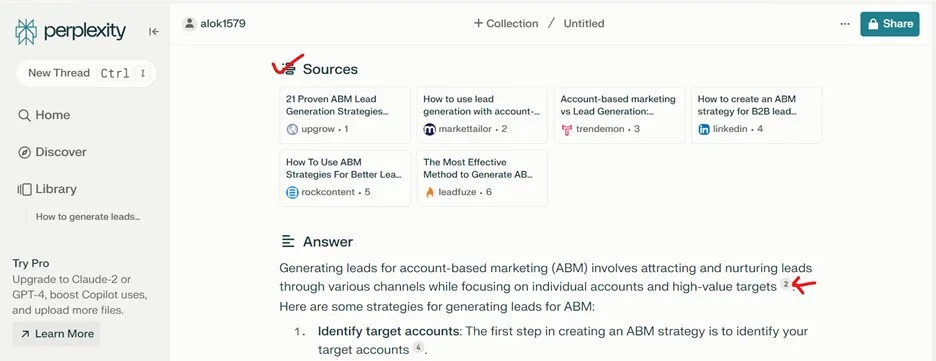
Perplexity is built as an answer engine rather than a general chat assistant. Its main feature is that it shows the sources behind each answer, which makes it easy to see which websites it relied on. That makes it especially useful when you want to learn why a brand was or was not mentioned.
What do they cost?
For developers, the API prices above are the clearest numbers. Gemini 3.0 Pro is the cheapest of the three at $2.00 per million input tokens, Claude Sonnet 4.6 costs $3.00, and GPT-5.5 costs $5.00. On output, the order is the same: $12, $15 and $30 per million tokens.
For regular chat plans, the main paid tiers sit at similar price points, so price rarely decides it. Usage limits matter more than the monthly fee. This video compares the $20 plans side by side if you want to see them in action:
Which one recommends your brand?
Nobody can tell you that without running your own questions, because the answer changes by question, by wording and by time. Be wary of any article that gives you a single ranking of which assistant recommends brands most. What we can explain is how each one finds brands, so you know what to fix.
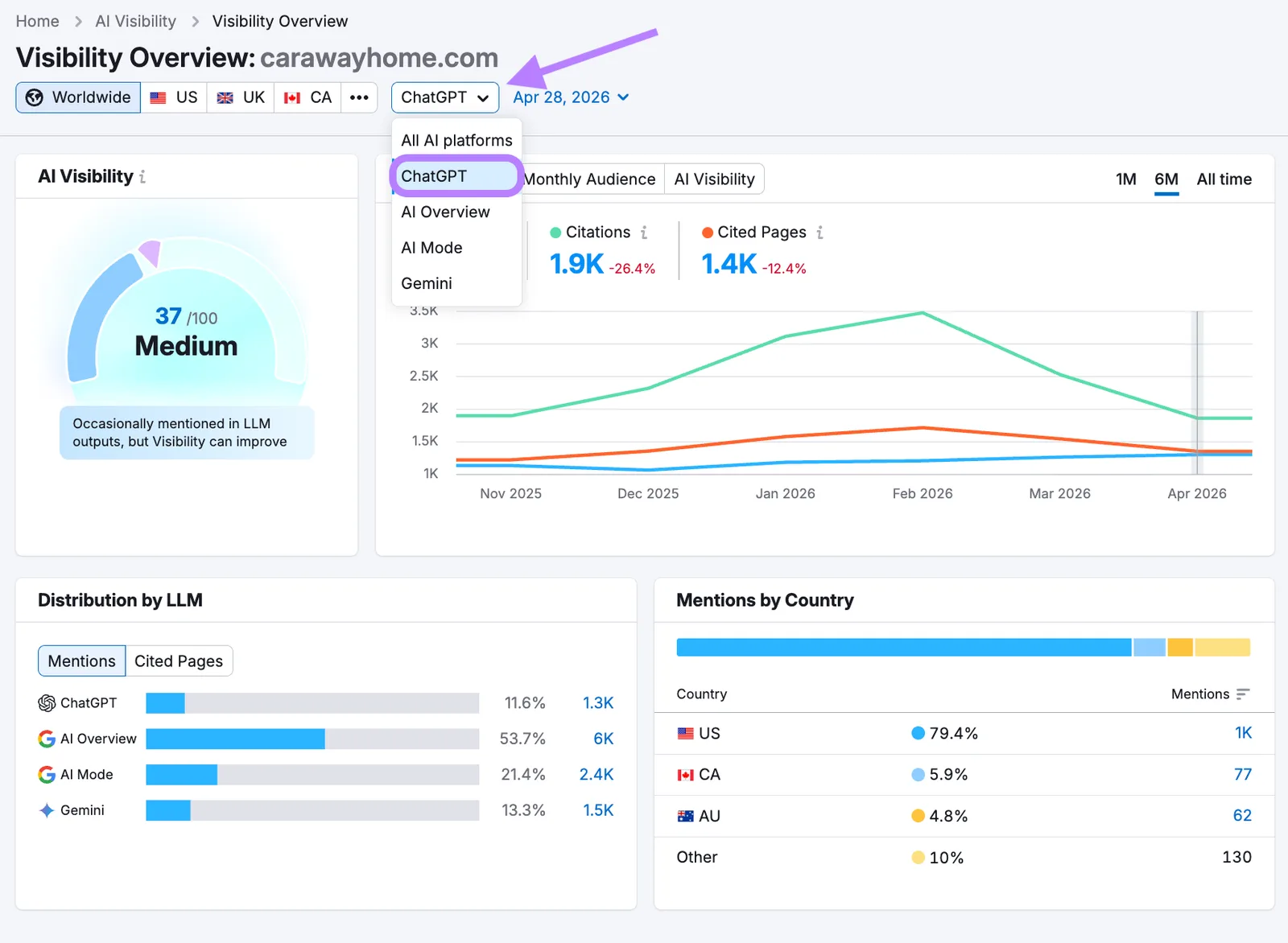
All four can search the web to answer a question. The Artificial Corner reviewer describes ChatGPT's web search as a quick Google search with a summary on top, plus a deep research mode that takes 5 to 30 minutes to produce a report. Gemini is tied closely to Google Search, which the data science comparison calls a real-time information advantage. Perplexity shows its sources with every answer.
The practical takeaway is simple. When these tools recommend a business, they lean on pages they can find, read and trust. That means clear pages that say what you do, who it is for, and why you are a good choice, backed by mentions on other credible sites. If you want the background, read GEO vs SEO and our guide to getting cited by ChatGPT and AI search.
How to check your own brand in 20 minutes
You can do a first pass by hand. Open ChatGPT, Claude, Gemini and Perplexity in separate tabs and ask each the same questions.
- Write 5 to 10 questions your buyers would really ask. Use the shapes below.
- Paste the exact same wording into each assistant, in a fresh chat each time.
- Log whether your brand is mentioned, where it appears in the list, how it is described, and which sources are shown.
- Note which competitors appear instead of you.
- Repeat a week later, since answers shift.
Use question shapes like these, swapping in your own category and city:
| Question type | Example |
|---|---|
| Best-of | What is the best plumber in Austin for emergency repairs? |
| Comparison | Is [your brand] or [competitor] better for small teams? |
| Reputation | Is [your brand] worth it? What do people say? |
| How to choose | How do I choose an accountant for a new startup? |
| Alternatives | What are good alternatives to [competitor]? |
For a quick check on a single page, try the free AI visibility checker.
What to log for each answer
| Column | What it tells you |
|---|---|
| Mentioned (yes or no) | Whether the assistant knows you exist for that question |
| Position | Whether you are the first pick or an afterthought |
| Sentiment | Whether the wording is positive, neutral or hesitant |
| Sources cited | Which pages shaped the answer, and which you could appear on |
| Competitors named | Who you are losing the recommendation to |
The sources column is the most useful one. If a competitor is recommended because of a comparison article or a review site, that is a page you can match, or a place you can get listed.
Which should you choose?
Pick by the job you need done, then add a visibility check on top. Here is the short version by reader type.
| If you are... | Best fit | Why |
|---|---|---|
| A writer or marketer who edits a lot | Claude | Reviewers say it follows detailed instructions closely and needs fewer rewrites |
| Someone who wants one tool for everything | ChatGPT | Higher everyday limits, strong voice mode, mature ecosystem |
| Heavy Google Workspace or Cloud user | Gemini | Closest tie to Google, strong with audio, video and images |
| A developer watching costs | Gemini | Lowest API price of the three flagships |
| A researcher who needs to verify sources | Perplexity | Shows the pages behind each answer |
| An owner who wants to be recommended | All four, checked | Each draws on different sources, so check each one |
Most people who work with these tools daily end up using more than one. One Artificial Corner commenter describes using ChatGPT for about half their work and Gemini with other Google tools for the rest. Claude, ChatGPT and Gemini are good enough that the choice is about habit and workflow more than raw ability.
Is the winner the same for brand visibility?
Not necessarily. The assistant you like using most may not be the one your customers use. Treat the choice of tool for your own work and the choice of where to be visible as two separate decisions, and track the second one across all four.
Where Rankfly fits
If your real goal is getting found, comparing assistants is only half the job. You also need pages that these tools can find and cite, published steadily. Rankfly is an SEO autopilot for small businesses, founders and marketers who want traffic from Google and AI assistants without doing SEO themselves.
Two parts matter here. Its AI visibility tracking asks ChatGPT, Claude, Gemini and Perplexity the questions buyers ask, and shows a visibility score, share of voice, position, sentiment and cited sources against up to 3 competitors, across 20 tracked questions. Gaps where a competitor is recommended turn into articles, and each one is re-checked 14 days after it goes live. Rankfly's autoblogging then researches and writes one SEO article a day, with sources, an FAQ and internal links, and publishes it to your site.
It costs $66 a month for 30 articles, with a 3-day free trial. It is not a full SEO suite like Semrush or Ahrefs. It is built for small teams that want the research, writing and publishing done for them. If you want to compare tracking tools first, see our roundup of the best AI visibility tools.
Final thoughts
Claude, ChatGPT, Gemini and Perplexity each win different jobs, and none of them wins for everyone. The more important question for your business is which of them recommends you today. Ask all four the same buyer questions, log the sources, and fix the gaps.
Frequently asked questions
Is Claude actually better than Gemini?
It depends on the job. Reviewers say Claude is better at following detailed instructions and acting as an agent on your computer, while Gemini is stronger at audio, video and image work and costs less through the API. Try both on your own tasks before paying for either.
What is currently the best AI model?
There is no single best model. A July 2026 data science comparison concluded that the right choice depends on the work, not on one winner, and reviewers split their praise across Claude, ChatGPT and Gemini. Pick the one that fits your main task, then test the others on it.
Why is Claude AI better than ChatGPT?
Reviewers who use both say Claude follows long, detailed prompts more closely, asks questions when something is unclear and needs less rewording. ChatGPT has advantages too, including a stronger voice mode and higher everyday usage limits. Claude is not better across the board.
Is Gemini falling behind Claude and ChatGPT?
The research we reviewed does not show that. Gemini is rated best for audio, video and image generation, and it has the lowest API price of the three flagship models. What has changed is that ChatGPT's share of chatbot traffic fell from 86.7% to 64.5% in a year, so users are spreading across several tools.
Which AI assistant recommends brands the most?
No source we reviewed ranks them, and the answer varies by question and over time. Ask ChatGPT, Claude, Gemini and Perplexity the same buyer questions and log which brands and sources each one names. A tracker such as Rankfly's AI visibility feature can repeat this for you.
How do I get my brand recommended by ChatGPT, Claude or Gemini?
Publish clear, specific pages that say what you do and who you help, answer real buyer questions, and earn mentions on other credible sites. These assistants lean on pages they can find through web search. Then re-check the same questions after your content has been live for a couple of weeks.
About the editorial team
Emma writes Rankfly's guides on SEO, AI search and getting small businesses found on Google and ChatGPT.