What Is GEO in Marketing? A Plain-English Guide
GEO is how you get your brand named and cited in AI answers. Here is the definition, how it works, 5 basics to start with, and how to check where you stand today.

See if ChatGPT recommends you
Rankfly tracks your visibility in ChatGPT, Claude, Gemini and Perplexity, then writes the articles that close the gaps.
Check my AI visibilityKey takeaways
- GEO (generative engine optimization) is the practice of making your content and brand easy for AI tools like ChatGPT, Gemini and Perplexity to find, trust and cite.
- GEO builds on SEO rather than replacing it: crawlable pages, clear answers and credible mentions help in both places.
- The five basics are access, direct answers, structure, off-site mentions and tracking.
- Sometimes 'geo marketing' means location-based marketing such as geotargeting, which is a different topic.
- You can start by asking AI tools the questions your buyers ask and noting who gets recommended.
Table of contents
GEO in marketing stands for generative engine optimization. It means making your content and brand easy for AI tools like ChatGPT, Gemini and Perplexity to find, trust and cite when they answer a question. Sometimes 'geo' also refers to location-based marketing, and we cover that below so you know which meaning you are dealing with.
What does GEO mean in digital marketing?
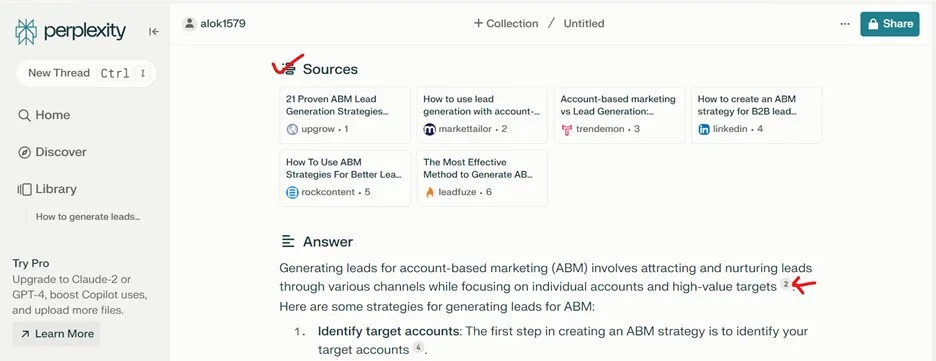
In digital marketing, GEO is about being part of the answer instead of only being a link on a results page. When someone asks an AI tool 'what is the best CRM for a five-person agency?', the tool writes a short answer and often names a few brands. GEO is the work that gets your brand named in that answer.
Conductor, an SEO platform, describes it as creating and refining your content so answer engines and AI chatbots can understand, surface and present it. The idea was also popularized by a 2023 academic paper on arXiv that studied how to improve visibility in generative engine responses. The terms 'geo ai', 'AI search optimization' and 'LLM optimization' all point at the same basic goal.
Your brand can appear in an AI answer in two ways. It can be mentioned by name, or it can be cited as a source with a link. Good GEO aims for both.
How does GEO work?
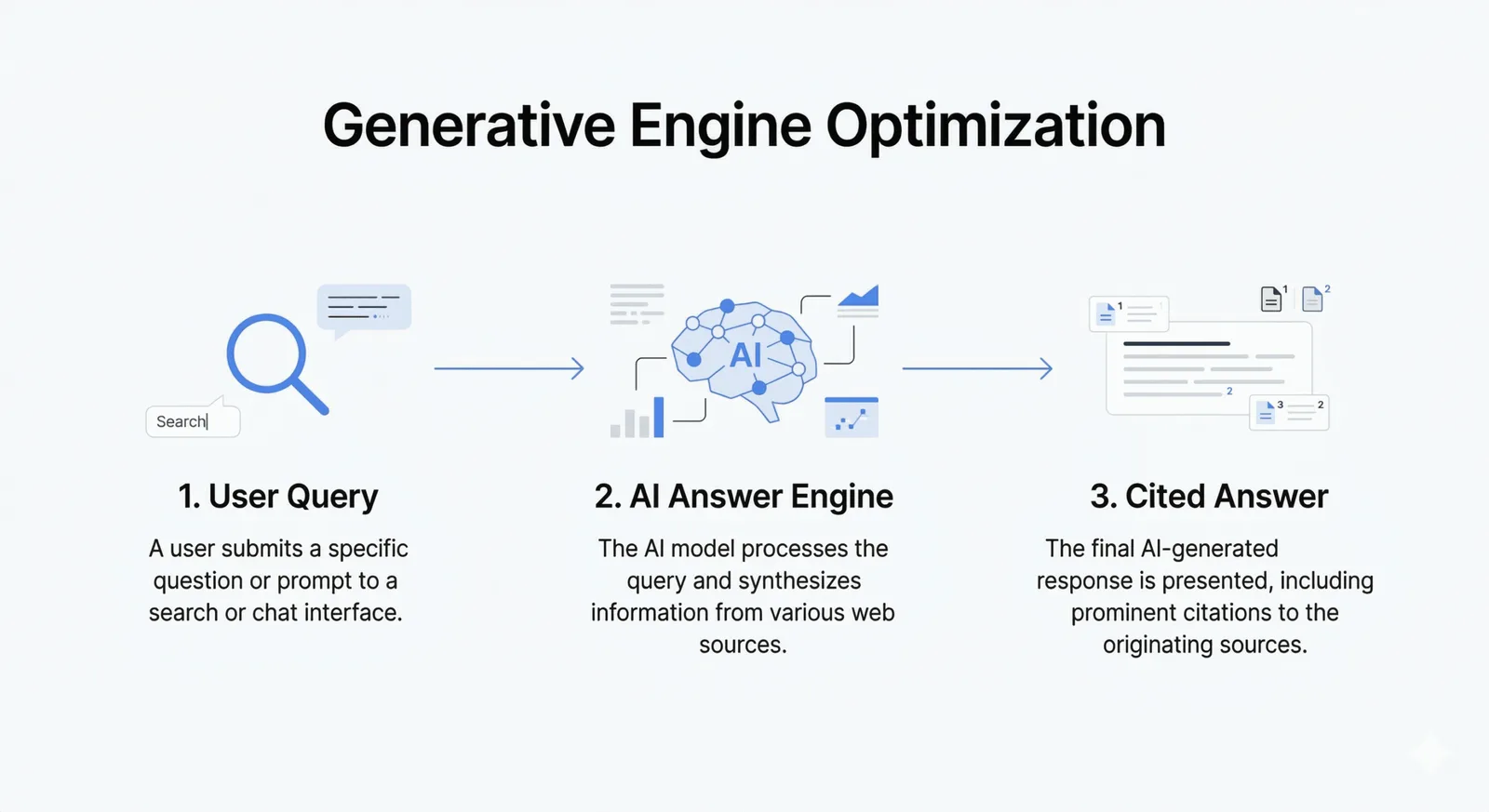
AI search tools do not just return ten links. They pull passages from across the web and compose an answer. The steps look roughly like this:
- A person asks a full question in plain language.
- The AI tool searches or draws on what it already knows, looking at articles, service pages, FAQs and other sources.
- It writes a summary from the sources it finds clearest and most trustworthy.
- It may name brands and show links to the pages it used.
Your job is to make your pages easy to pull from and your brand easy to trust. If you want a quick visual walkthrough, this short explainer covers the idea in simple terms.
GEO vs SEO vs AEO: what is the difference?
SEO aims to rank your pages in a list of search results. AEO (answer engine optimization) aims to make you the direct answer in zero-click formats like featured snippets and voice search. GEO aims to get you mentioned and cited inside AI-generated responses. We go deeper in our guide to GEO vs SEO.
| SEO | AEO | GEO | |
|---|---|---|---|
| Full name | Search engine optimization | Answer engine optimization | Generative engine optimization |
| Where you show up | Ranked links on Google and Bing | Featured snippets, voice answers | ChatGPT, Gemini, Perplexity and AI summaries |
| Main goal | Clicks to your site | Being the direct answer | Being mentioned and cited in the answer |
| Typical tactics | Keywords, backlinks, site speed | Q&A formatting, FAQ schema | Clear passages, trusted mentions, structured content |
Many marketers treat AEO and GEO as close cousins. Conductor puts it this way: the difference between them is small, a bit like optimizing for Google versus Bing, and tactics for one tend to help the other. Don't get stuck on the labels. The work overlaps heavily.
5 GEO basics to start with
You do not need a new strategy from scratch. These five basics cover most of what matters.
1. Make your site easy for bots to read
AI tools can only cite pages they can access. Check that your key pages are crawlable and indexable, load fast, use HTTPS and work on mobile. Some AI crawlers still struggle with pages that depend heavily on JavaScript, so plain server-rendered content is the safer choice.
A quick first check is your robots.txt file. Our free robots.txt checker shows whether you are accidentally blocking anything important.
2. Answer the question in the first two sentences
AI tools pick passages that answer a question cleanly. Put a direct answer right under each question-style heading, then add detail below it. Keep paragraphs short and focused on one idea.
Here is a before and after:
- Before: 'Pricing is a topic many of our customers ask about, and there are lots of factors that can come into play depending on the project.'
- After: 'A standard residential roof replacement costs more when the roof is steep or needs decking repair. Most quotes depend on size, materials and access.'
The second version states something concrete that an AI tool could quote as is. If you are unsure what your audience asks, our free People Also Ask tool is a good place to find real questions.
3. Structure your content and add schema
Use clear headings, short lists and tables where they fit. Add FAQ sections to key pages, written from questions customers really ask. Schema markup, the code that labels what a page contains, gives machines a clearer picture of your content.
You can generate the code without writing it by hand using the FAQ schema generator or the schema markup generator.
4. Build mentions beyond your own site
AI tools do not only look at your website. They also pick up how often and where your brand is mentioned across the web, with or without a link. Think directories, review sites, industry publications, podcasts, forums and partner pages. A brand that is described the same way in many credible places is easier to trust.
Backlinks still matter for SEO, so keep earning them. Just widen your goal from 'get the link' to 'get talked about by credible sources'.
5. Track whether AI tools actually recommend you
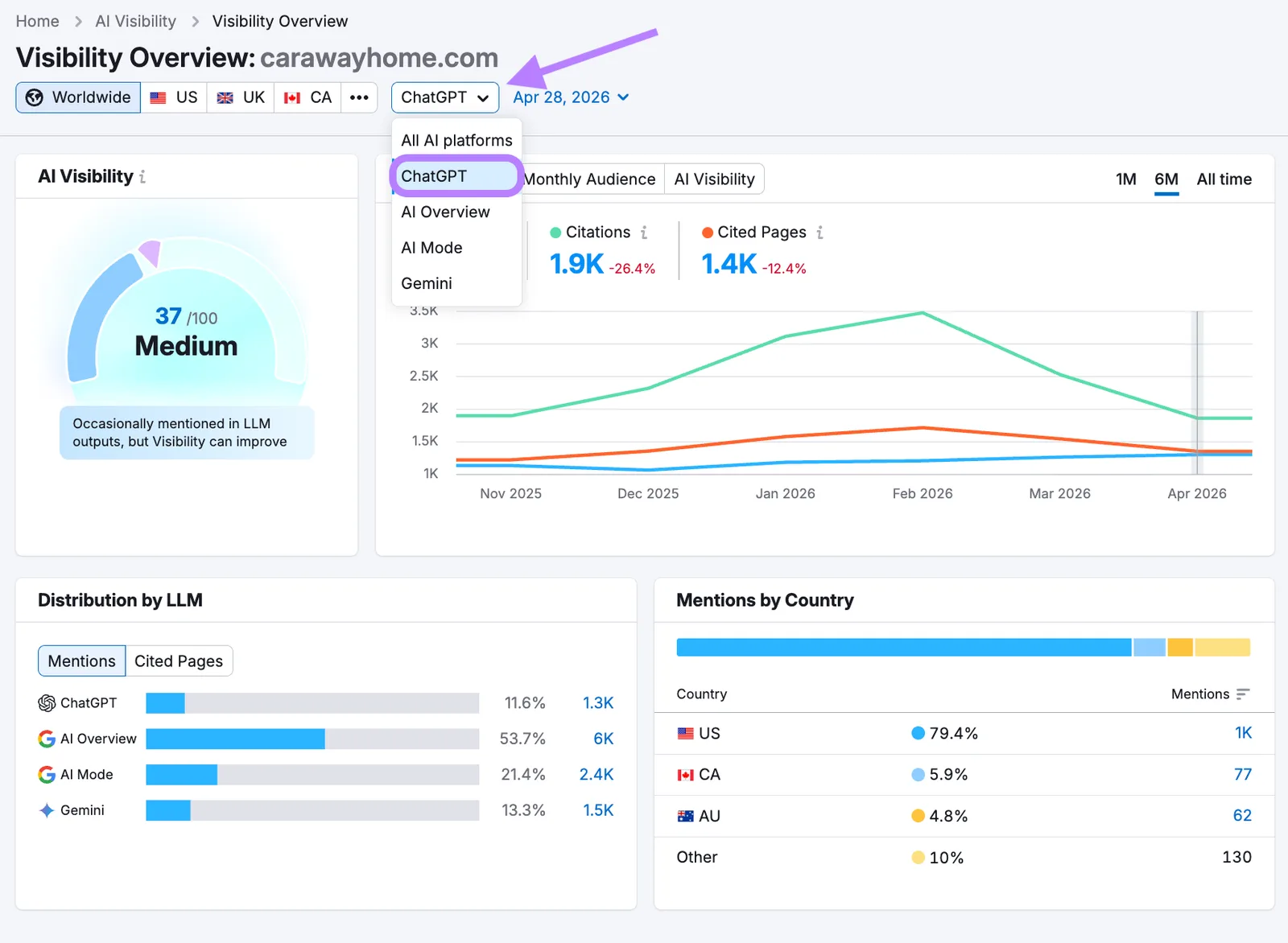
You cannot improve what you do not check. Ask ChatGPT, Gemini, Claude and Perplexity the questions your buyers ask and note which brands appear, in what order, and which sources get cited.
One caution: SparkToro has published research showing AI tools can be highly inconsistent when recommending brands. One lucky or unlucky answer tells you little. Look at patterns across many questions and repeat the checks over time.
What is a GEO example?
Take a local HVAC company. A homeowner asks an AI tool, 'who should I call for an AC replacement in Phoenix and what will it cost?' The tool writes a short answer, names two or three companies and lists typical price ranges.
The companies that get named tend to have a few things in common (this is an illustration, not a study):
- A service page that states what they do, where, and roughly what it costs.
- An FAQ that answers the exact questions homeowners ask.
- Consistent business details across their site, Google Business Profile and directories.
- Reviews and mentions on third-party sites.
That is GEO in practice. None of it is exotic. It is clear information, in the right places, from a business that looks credible. If you run a local business, our local SEO guide covers the foundations that feed into this.
Is 'geo' in marketing also about location?
Yes, sometimes. Geotargeting, or geo marketing, means delivering ads or content based on where someone is, such as showing a promotion only to people within 10 miles of a store. It is a different idea from generative engine optimization, even though the abbreviation looks the same.
The two can overlap for local businesses. People now ask AI tools for local help with questions like 'best electrician near me', so a business with strong local signals has a better shot at being named. Context usually makes the meaning clear: if the topic is ChatGPT, Gemini or AI answers, GEO means generative engine optimization.
Why does GEO matter now?
Traditional Google search still sends most search traffic for most sites. But more discovery is moving into AI answers, and Google itself is adding AI summaries to its results. Semrush data from 2025 found AI Overviews showing for a growing share of queries.
The practical risk is simple. If an AI answer names three competitors and not you, a buyer may never see your site, even if you rank well in the regular results. Microsoft Advertising has also published a guide on moving from discovery to influence with AEO and GEO, a sign that the big platforms are paying attention.
What should you do about GEO this week?
Keep it small and practical:
- List 10 to 20 questions your customers ask before they buy.
- Ask each one in ChatGPT, Gemini, Claude and Perplexity. Write down which brands and sources show up.
- For each question where you are missing, check if you have a page that answers it clearly.
- Write or rewrite those pages with a direct answer first, then detail, then an FAQ.
- Repeat the checks every few weeks.
For a fast first read, try the free AI visibility checker. If you want to find the right topics to write about, a keyword generator helps you find questions worth answering.
Where Rankfly fits
Doing this by hand takes time. Rankfly asks ChatGPT, Claude, Gemini and Perplexity the questions your buyers ask, tracking up to 20 questions. It shows your visibility score, share of voice, position, sentiment and cited sources against up to three competitors.
When it finds gaps where competitors are recommended and you are not, those gaps become articles, and each article is re-checked 14 days after it goes live. Rankfly is built for small teams that want content researched, written and published for them, not for a full SEO suite. It costs $66 per month for 30 articles, with a 3-day free trial.
Final thoughts
GEO is getting your brand named and cited in AI answers, and it rests on the same foundations as good SEO: clear content, accessible pages and credible mentions. Start by asking AI tools your buyers' questions and see who gets recommended. Then fix the gaps one page at a time.
Frequently asked questions
What is GEO in marketing in simple terms?
GEO stands for generative engine optimization. It is the work of making your content and brand easy for AI tools like ChatGPT, Gemini and Perplexity to find, trust and cite when they answer questions.
Is GEO the same as SEO?
No, but they overlap a lot. SEO focuses on ranking in lists of search results, while GEO focuses on being mentioned and cited in AI-generated answers. Good SEO basics such as crawlable pages and helpful content support GEO too.
What is the difference between AEO and GEO?
AEO (answer engine optimization) is about being the direct answer in zero-click results like featured snippets and voice search. GEO is about being cited in answers from AI chat tools. In practice the tactics overlap, and many marketers use the terms almost interchangeably.
What is geotargeting in marketing?
Geotargeting means showing ads or content to people based on their location, such as a city or a radius around a store. It is separate from generative engine optimization, although both use the 'geo' abbreviation.
How do I know if my business shows up in AI answers?
Ask ChatGPT, Gemini, Claude and Perplexity the questions your customers ask and note which brands and sources appear. Because AI answers can vary from one try to the next, repeat the checks across many questions and over time. A tool like the free AI visibility checker or Rankfly's AI visibility tracking can speed this up.
About the editorial team
Emma writes Rankfly's guides on SEO, AI search and getting small businesses found on Google and ChatGPT.