Best LLM SEO Tools in 2026: Tracking vs Optimization Compared
LLM SEO tools either track whether AI assistants mention you or help you create content they can cite. Here are 9 options, with sourced prices, pros, cons and how to choose.

See if ChatGPT recommends you
Rankfly tracks your visibility in ChatGPT, Claude, Gemini and Perplexity, then writes the articles that close the gaps.
Check my AI visibilityKey takeaways
- LLM SEO tools fall into two groups: tracking tools that show if ChatGPT, Gemini and others mention you, and optimization tools that help you fix the gaps.
- Tracking-only tools are cheap to start (from about $29 a month in the sources), but they tell you what is wrong without fixing it.
- In PageOptimizer Pro's own 2026 test, only 1 of 13 options reached its 80+ score, so a plain 'write SEO content' prompt to a general LLM is not enough.
- Small teams usually do better with one tool that tracks gaps and turns them into published articles than with a dashboard they never act on.
- Check current pricing before you buy. Plans, prompt limits and supported AI engines change often.
Table of contents
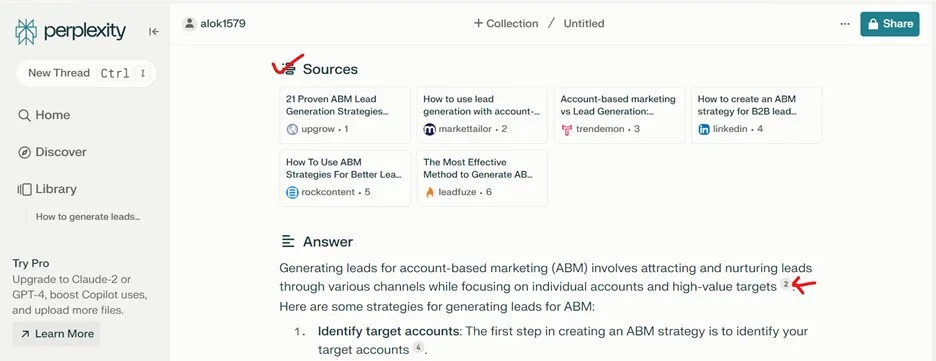
LLM SEO tools help you show up in answers from ChatGPT, Gemini, Claude and Perplexity. They come in two types: tracking tools that show whether AI assistants mention or cite your brand, and optimization tools that help you create and improve the content those assistants quote. Most teams need both jobs done, and the right pick depends on whether you want a dashboard or a finished article.
Prices below are the ones reported in the sources I used (reviews and vendor pages from 2026). Plans change fast, so check each vendor before you buy.
Quick picks: the best LLM SEO tools at a glance
| Tool | Type | Best for | Starting price (as reported) | Standout feature |
|---|---|---|---|---|
| Rankfly | Tracking + content | Small teams that want gaps turned into published articles | $66/month for 30 articles | Tracks 4 AI assistants, then writes and re-checks the fix |
| Semrush One | Both (broad suite) | Teams that want classic SEO and AI visibility in one place | $199/month | SEO Toolkit plus AI Visibility Toolkit |
| SE Visible (SE Ranking) | Tracking | Agencies and brand teams that need source and sentiment data | $99/month (Basic) | Cited domains and URLs with SEO metrics |
| Writesonic | Tracking + content | Brands that want tracking and an action list in one platform | $199/month | Action Center that ranks fixes by impact |
| AIclicks | Tracking + content | Teams that want tracking plus AI-written posts | $79/month | Agents that create content for missed citations |
| Otterly AI | Tracking | Budget-friendly monitoring | $29/month | 15 prompts across four AI surfaces |
| PageOptimizer Pro | Optimization | Publishing content that hits on-page targets | Check current pricing | POP AI Writer and its on-page score |
| Wellows | Tracking + outreach | Turning citation gaps into content and outreach | $29/month | Citation gap focus |
| KIME | Tracking | Agencies that need client reporting | $109/month (50 prompts) | AI Perception Report and Action tab |
What are LLM SEO tools?
LLM SEO tools are software that measure or improve how large language models such as ChatGPT, Gemini, Claude and Perplexity describe, mention and cite your brand. The goal is to be the answer when a buyer asks an AI assistant for a recommendation, not only to rank in a list of blue links.
The term is used two ways. Some people mean tools that track AI visibility. Others mean the LLMs themselves, as in "which LLM writes the best SEO content." This guide covers both, because the second question affects whether you need a dedicated tool at all.
If you want the fundamentals first, read GEO vs SEO and our guide to getting cited by ChatGPT and AI search.
Tracking tools vs optimization tools
This is the split that matters most when you compare LLM SEO tools. Tracking tools tell you where you stand. Optimization tools help you change it.
| Tracking tools | Optimization tools | |
|---|---|---|
| Main job | Monitor mentions, citations, sentiment and share of voice in AI answers | Create or improve content so it is easier to rank and be cited |
| Typical output | Dashboards, visibility scores, lists of cited sources | Briefs, drafts, on-page scores, published articles |
| Answers the question | "Does ChatGPT recommend us, and who does it recommend instead?" | "What should we publish or fix to get recommended?" |
| Examples in this list | SE Visible, Otterly AI, KIME | PageOptimizer Pro |
| Hybrid examples | Rankfly, Writesonic, AIclicks, Semrush One, Wellows | Same |
| Risk | You see the problem and still do nothing | You publish without knowing which questions matter |
A tracking tool without an action plan is a report. An optimization tool without tracking is a guess. The hybrids try to close that loop, which is why they cost more.
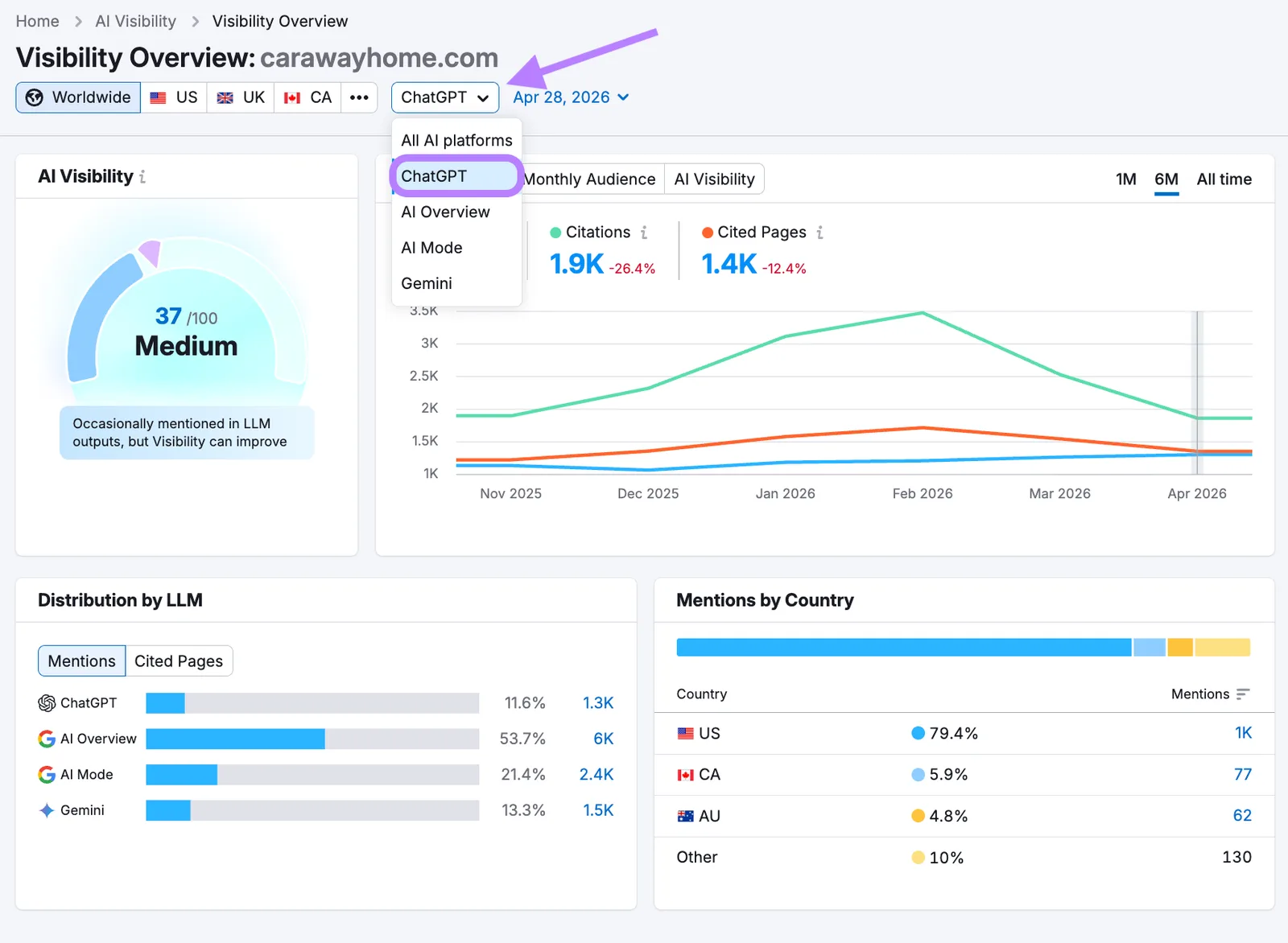
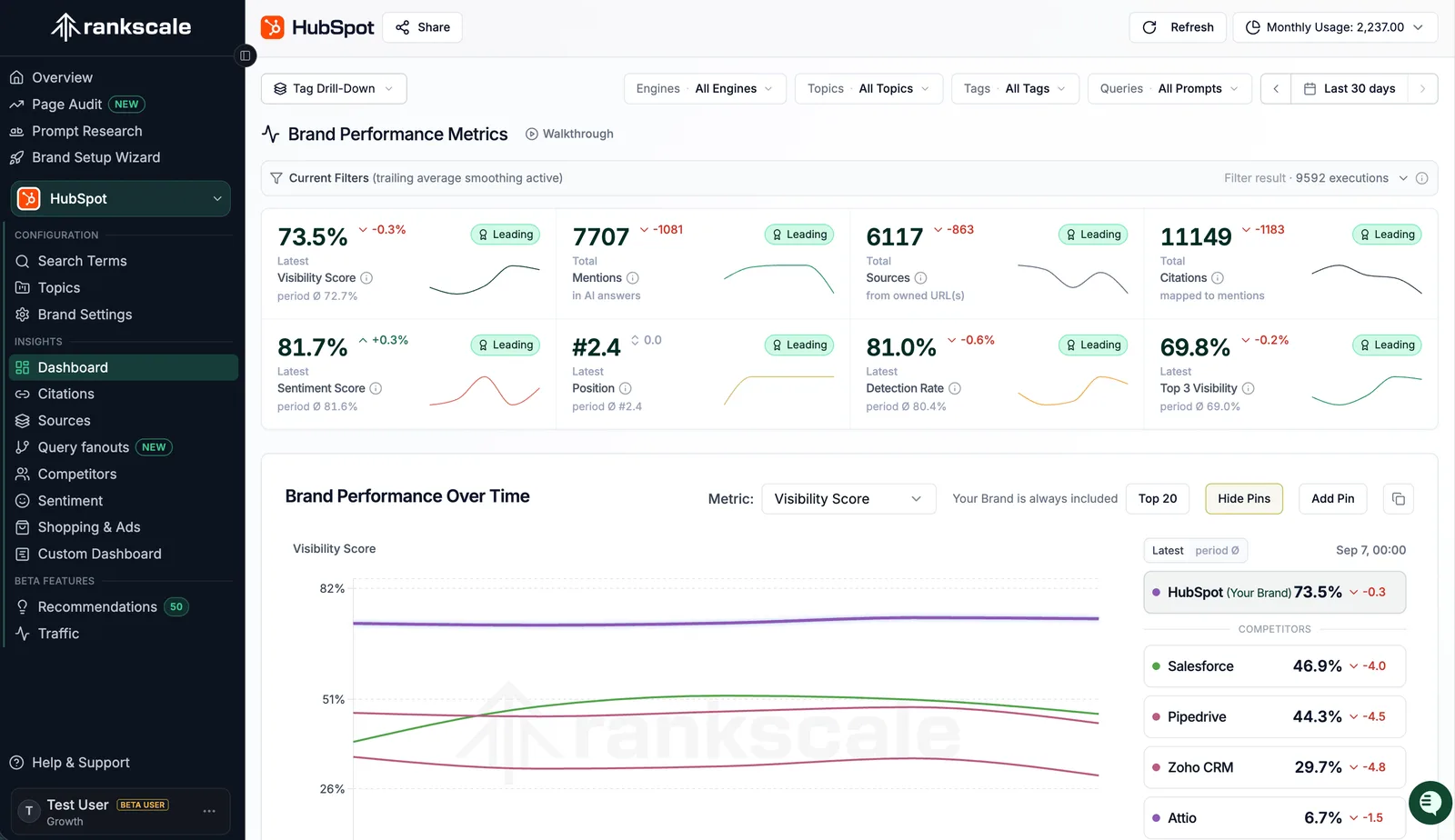
This video walks through several visibility tracking tools if you want to see dashboards in action before choosing:
1. Rankfly: best for small teams that want the gaps fixed for them
Rankfly is an SEO autopilot for small businesses, founders and marketers who want traffic from Google and AI assistants without doing SEO themselves. Its AI visibility tracker asks ChatGPT, Claude, Gemini and Perplexity the questions buyers ask, then shows a visibility score, share of voice, position, sentiment and cited sources against up to 3 competitors, across 20 tracked questions.
The difference is what happens next. Gaps where competitors are recommended become articles, written in your brand's voice with internal links, sources, an FAQ and a featured image. Each article is re-checked 14 days after it goes live, so you see whether it moved the answer. Publishing can run automatically to WordPress, Shopify, Webflow, Wix, Framer, Ghost, Notion or a webhook, or you can approve each article first in review mode. See how that works on the AI autoblogging page.
Who it's for: small businesses, founders and lean marketing teams that do not have time to turn dashboards into content.
Pros:
- Tracking and content in one product, with a re-check after publishing
- Covers four AI assistants plus Google-focused SEO articles
- $66/month for 30 articles, with a 3-day free trial and cancel anytime
Cons:
- 20 tracked questions and up to 3 competitors, so it is not built for large enterprise monitoring
- Not a full SEO suite like Semrush or Ahrefs
- Backlinks are an opt-in exchange for paid members, not a link database
2. Semrush One: best all-in-one suite with AI visibility
Semrush One combines the classic SEO Toolkit with an AI Visibility Toolkit. According to a 2026 review from Behind Rankings, it starts at $199/month and tracks brand visibility in ChatGPT, Gemini, AI Mode and AI Overviews across more than 45 countries. The reviewer lists 50 prompts for prompt tracking and AI Search Checks in Site Audit for up to 100 pages. The same review reports Semrush's Pro plan, which covers only the SEO Toolkit, from $139.95/month. Details are in Behind Rankings' roundup.
Who it's for: in-house teams, agencies and site owners who already live in Semrush and want AI visibility added to the same workflow.
Pros:
- Keyword research, audits, rank tracking and AI visibility under one login
- Wide country coverage for AI visibility tracking
- The AI Search Health report in Site Audit checks how well a site is set up for LLMs
Cons:
- $199/month is a large step up for a small business
- It is a toolbox, not a writer, so you still produce the content yourself
- The depth means a learning curve for non-specialists
3. SE Visible by SE Ranking: best for sources and sentiment
SE Visible is a standalone AI brand-visibility platform from the SE Ranking team. Per its listing, it tracks mentions, citations, sentiment and share of voice across ChatGPT, Gemini, AI Mode and AI Overviews in 42 countries, and every cited domain and URL comes with SEO metrics such as traffic and backlinks. You can see the product at visible.seranking.com.
Reported plans are Basic at $99/month (200 prompts, 3 projects), Core at $189/month (450 prompts, 5 projects) and Plus at $355/month (1,000 prompts, 10 projects), with a 10-day free trial. All plans include all four engines.
Who it's for: agencies and brand teams that need to understand which sources shape AI answers.
Pros:
- Shows the actual AI response behind each number
- Source analysis helps you decide between a content fix, an on-site fix or a third-party mention
- No engine add-ons on any plan
Cons:
- Focused on AI visibility. Rank tracking and site audits live in SE Ranking, a separate product
- Claude and Copilot were listed as coming soon in the source
- It tracks and explains but does not write the fix
4. Writesonic: best for a track-then-act workflow
Writesonic positions itself as an AI search visibility platform that monitors brands across ChatGPT, Perplexity, Google AI Overviews, Gemini, Claude, Copilot and others. Its AI visibility tracker includes an Action Center that, by its own description, ranks content, citation and technical gaps by impact, plus content agents to ship fixes. It also lists AI crawler analytics and competitor benchmarking.
Writesonic's own page says paid plans start at $199/month. A separate 2026 review lists $99/month for its SEO automation platform, so confirm which plan includes the features you need.
Who it's for: brands and agencies that want tracking, SEO tools and content creation in one platform.
Pros:
- Covers tracking, recommendations and content generation
- Broad engine coverage with no hidden add-ons, according to the vendor
- Includes an AI traffic analytics feature that the vendor says is available on a free tier
Cons:
- Price starts higher than most small-business budgets
- The vendor itself notes a learning curve because of the depth of features
- Much of the detail comes from Writesonic's own page, so test it on a trial
5. AIclicks: best for tracking plus done-for-you posts
AIclicks tracks how brands appear across ChatGPT, Google AI Overviews, Gemini and Perplexity, with competitor benchmarking and weekly recommendations. Its AI agents create content to address missed citations.
Reported pricing: Starter $79/month with 50 prompts and 10 AI blog posts; Pro $189/month with 150 prompts and 20 posts; Business $499/month covering Claude and Grok, with 300+ prompts and 30 posts. A 7-day trial is available.
Who it's for: SEO teams and business owners who want monitoring and content generation from one tool.
Pros:
- Content included in every tier
- Visibility audit and weekly recommendations
- Entry price is lower than most hybrids
Cons:
- Claude and Grok tracking appear only on the Business plan in the source
- Higher prompt volumes need the more expensive plans
6. Otterly AI: best budget tracker
Otterly AI is described by Behind Rankings as the best affordable AI visibility tracker, at $29/month for 15 prompts across ChatGPT, AI Overviews, Perplexity and Copilot, with a 7-day free trial.
Who it's for: solo founders and small sites that want a low-cost look at whether AI assistants mention them.
Pros:
- Lowest entry price among the paid trackers in this list
- Simple scope, easy to start
Cons:
- 15 prompts covers only a small set of buyer questions
- Tracking only, so the content work is on you
- The reviewed plan lists four surfaces, so check whether Gemini and Claude are covered if they matter to you
7. PageOptimizer Pro: best optimization tool for on-page targets
PageOptimizer Pro (POP) is the clearest example of an optimization-first tool. Its AI Writer builds content around data-driven on-page targets such as title tag, H1, subheading count and term coverage, and scores the result with its POP Score. In its 2026 study, POP tested 12 major LLMs plus its own writer. Each model got a baseline prompt and an "SEO-optimized" prompt, and the results were scored on POP's own criteria.
Two more findings from that study matter even if you treat the vendor's framing with caution. Adding the word "SEO" to a prompt raised scores a lot for some models (DeepSeek V3.x went from 17.96 to 71.48), yet most still missed structure targets. Only 7 of 13 outputs included a title tag at all. The practical lesson: a general LLM can write well, but "write an SEO article" does not reliably produce a page that is structured to rank.
Who it's for: teams that publish competitive pages and want a score to write against.
Pros:
- Concrete on-page targets instead of guesswork
- Useful for updating existing pages
- Lists a 7-day refund guarantee on its page
Cons:
- The study and the score are the vendor's own, so treat the 100 vs 72.8 gap as marketing evidence
- Built around on-page optimization. Check how its AI visibility tracker covers your needs before assuming it replaces a dedicated one
- Pricing was not in the sources, so check the current plan
If you are comparing content optimizers like Surfer SEO, our alternatives pages show how Rankfly differs.
8. Wellows: best for turning citation gaps into outreach
Behind Rankings lists Wellows as the best pick for brands, agencies and marketing teams turning AI citation gaps into content and outreach opportunities, from $29/month with a 7-day free trial. The angle is useful because AI assistants often cite third-party pages, not only your own site.
Who it's for: teams that plan to earn mentions on other sites, not just publish on their own.
Pros:
- Low starting price
- Focus on citation gaps, which points to concrete next steps
Cons:
- Less detail was available on prompt limits and engine coverage, so verify on its pricing page
- Outreach takes time and human effort
9. KIME: best for agencies reporting to clients
KIME is described by Behind Rankings as the best AI visibility tracker for agencies, at $109/month for 50 prompts with a 7-day trial. The review highlights a prompts report, an AI Perception Report and an Action tab.
Who it's for: agencies that need to show clients how AI assistants talk about them.
Pros:
- Reporting built around how brands are perceived, not only counts
- An Action tab points toward next steps
Cons:
- 50 prompts at $109/month is pricey for a small business
- It does not write or publish content for you
Free options worth using first
You do not need to pay on day one. Behind Rankings calls Bing's AI Performance report (citations, pages and topics) the best free source of AI citation data. You can also ask the assistants your buyer questions by hand, though that does not scale.
For a quick snapshot, try the free AI Visibility Checker. To help AI crawlers understand your site, the llms.txt generator is another free starting point.
How to choose the right LLM SEO tool
Start with the job, not the feature list. Then match budget and team size.
| If you... | Choose | Why |
|---|---|---|
| Want a cheap first look at AI mentions | Otterly AI or the free checker | Low cost, no commitment |
| Run a small business and want content done for you | Rankfly | Tracks gaps, writes and publishes the fix, then re-checks |
| Already use Semrush or SE Ranking | Semrush One or SE Visible | Adds AI data to a workflow you know |
| Are an agency reporting to clients | SE Visible or KIME | Source analysis, sentiment and reporting |
| Need a content workflow plus tracking in one tool | Writesonic or AIclicks | Monitoring and content under one roof |
| Publish competitive pages and want on-page scores | PageOptimizer Pro | Data-driven targets for each page |
| Want to earn third-party citations | Wellows | Citation gaps and outreach |
Five questions to ask before you pay:
- Which AI assistants does it cover? Make sure it includes the ones your buyers use, and check which plans add engines.
- How many prompts do you get? 15 prompts and 450 prompts are very different products.
- Does it show sources? Knowing which pages AI cites tells you where to act.
- Does it help you fix gaps? If not, budget for who will write the content.
- What is the real monthly cost? Add prompt limits, extra brands and seats to the sticker price.
For a deeper comparison of trackers alone, see our guide to the best AI visibility tools. If you want content-focused picks, read best AI SEO tools for small businesses.
Final thoughts
LLM SEO tools either show you where AI assistants ignore you or help you fix it, and the best setups do both. Start with a free check or a cheap tracker, then pick a tool that turns the gaps into published content so the data does not sit unused.
Frequently asked questions
What are LLM SEO tools?
LLM SEO tools are software that track or improve how ChatGPT, Gemini, Claude and Perplexity mention and cite your brand. Tracking tools monitor visibility, while optimization tools help you create content those assistants can quote.
What is the difference between an LLM tracker and an LLM optimization tool?
An LLM tracker shows whether AI assistants mention you, how they describe you and which competitors they name instead. An optimization tool helps you change that by creating or improving content. Some products, such as Rankfly, Writesonic and AIclicks, combine both.
Are there free LLM SEO tools?
Yes. Bing's AI Performance report is described as a free source of AI citation data, and Rankfly offers a free AI Visibility Checker. You can also ask assistants your buyers' questions by hand, but that does not scale or track changes over time.
Can ChatGPT or another general LLM do my SEO writing?
It can draft well, but results vary. In PageOptimizer Pro's own 2026 test, the best general LLM scored 72.8 against its 80+ target, and many outputs missed basics like a title tag. Treat general LLMs as good for brainstorming and drafts, then check structure, sources and on-page basics before you publish.
How much do LLM SEO tools cost?
In the sources used here, paid trackers start around $29 a month (Otterly AI, Wellows) and range up to $199 a month or more for Semrush One and Writesonic. Rankfly is $66 a month for 30 articles plus AI visibility tracking. Prices change, so check each vendor's current plan.
How long does it take to see results from LLM SEO?
There is no fixed timeline. One vendor reports that changes often appear 6 to 12 weeks after publishing optimized content, but that is not a guarantee. Re-checking the same questions after you publish, as Rankfly does 14 days after each article goes live, shows what moved.
About the editorial team
Emma writes Rankfly's guides on SEO, AI search and getting small businesses found on Google and ChatGPT.